

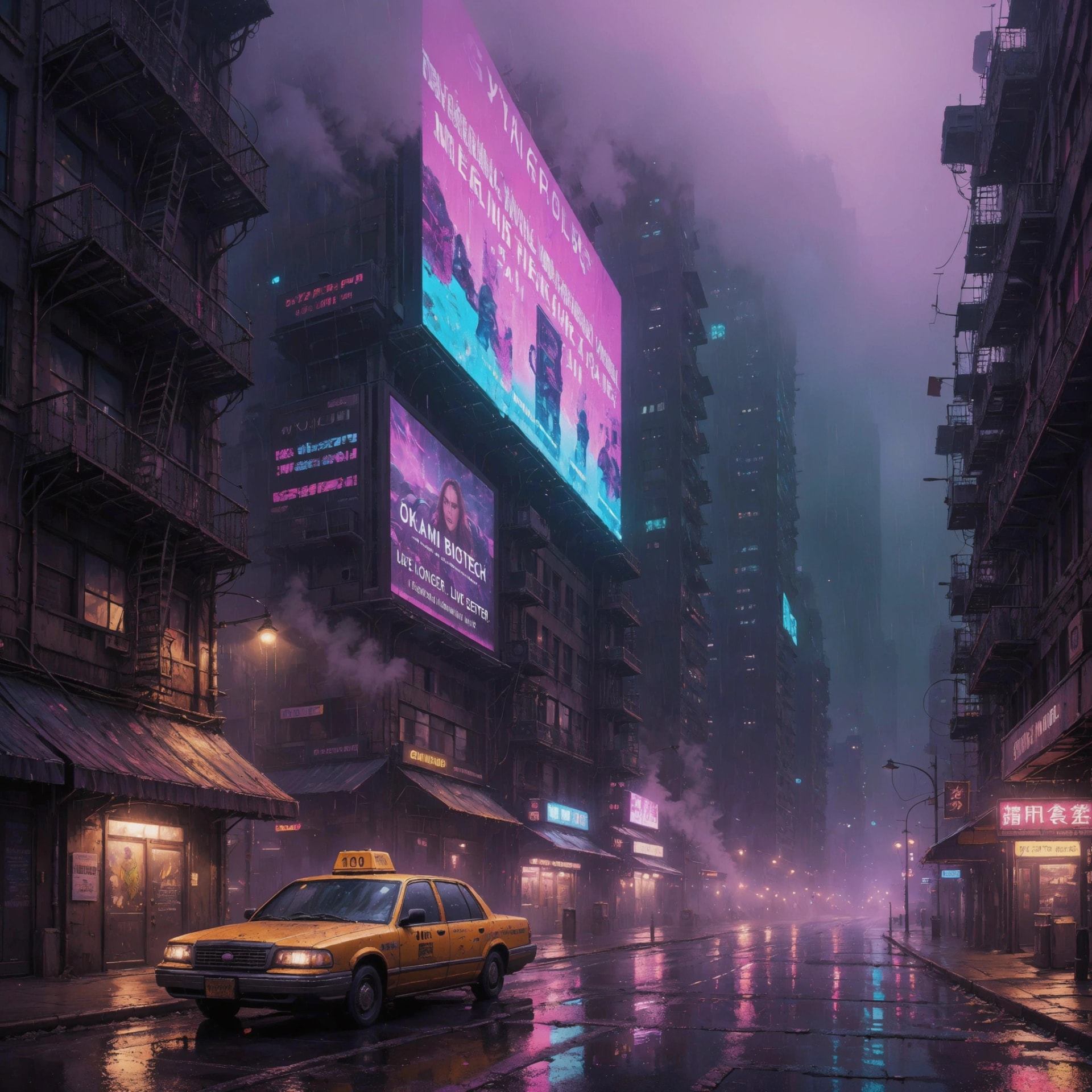
The ’90s cyberpunk aesthetic imagines a future where technological progress does not necessarily improve human life. Computer networks connect everyone, but also make them traceable. Corporations offer convenience while gaining influence. Bodies become upgradeable, raising uncomfortable questions about identity and control.
Its appeal goes beyond black coats, glowing cityscapes, and early computer graphics. Cyberpunk combines fascination with technology and distrust of the systems that own it. That tension makes it the darker counterpart to the optimistic digital futures associated with the 1990s.
To understand the aesthetic, look at three things together: how the future looks, who holds power, and how people resist. Remove the last two, and much of cyberpunk becomes futuristic decoration.
Key Takeaways
- ’90s cyberpunk combines advanced technology with concentrated power, social disorder, and resistance.
- Its visual language includes dense cities, early CGI cyberspace, dark fashion, and technologically altered bodies.
- Its 1980s foundations gained new relevance as computers and internet access expanded during the 1990s.
- Cyberpunk questions who controls technology rather than simply rejecting technological progress.
Table of Contents
- What Is the ’90s Cyberpunk Aesthetic?
- Dark ’90s Futurism Versus Optimistic Y2K Futures
- The Visual Language of ’90s Cyberpunk
- The Ideas That Make Cyberpunk More Than a Look
- Key References for Understanding the Aesthetic
- Why Cyberpunk’s Anxieties Feel Familiar
- How to Recognize or Use the Aesthetic Thoughtfully
- Common Misconceptions to Avoid
- The Lasting Appeal of Dark ’90s Futurism
What Is the ’90s Cyberpunk Aesthetic?
Cyberpunk is a science-fiction genre and visual aesthetic that places advanced technology alongside social disorder, concentrated power, and life on the margins. Its protagonists often navigate systems controlled by powerful corporations or oppressive governments, using technical knowledge to survive or push back.
The two halves of the name explain the central conflict:
- Cyber: computers, networks, virtual environments, and the integration of technology into human bodies.
- Punk: resistance to established authority, especially when technological systems reinforce inequality or restrict freedom.

Its foundations were already visible in 1980s works such as Blade Runner, William Gibson’s Neuromancer, and Akira. The 1990s did not invent cyberpunk. Instead, the expanding presence of computers and the internet made its imagined problems feel more immediate.
A networked future was becoming something people could enter from a home computer or an internet café. That made cyberspace exciting, but it also gave questions about privacy, surveillance, and corporate control a recognizable setting.
Dark ’90s Futurism Versus Optimistic Y2K Futures
Nostalgia can flatten the 1990s into a single hopeful vision: global connection, immersive entertainment, and digital tools that make everyday life easier. Cyberpunk belongs to the same technological moment, but asks what happens when those promises serve institutions more than individuals.
| Technological promise | Cyberpunk’s darker interpretation |
|---|---|
| Networks connect people across the world. | Networked activity creates opportunities for tracking and control. |
| Digital services make life convenient. | Convenience can increase dependence on powerful companies. |
| Virtual worlds offer freedom. | Digital life can displace physical experience or become another controlled environment. |
| Technology improves human capabilities. | Altered bodies and minds complicate identity and autonomy. |
This is not simply a distinction between bright and dark colors. The deeper difference is whether technological progress is treated as liberation or as a contested form of power.
Earlier atomic-age futurism contained a comparable contradiction. The same energy associated with extraordinary convenience and exploration also carried the possibility of destruction. Cyberpunk gives that double-edged relationship an information-age form.
The Visual Language of ’90s Cyberpunk
Dense cities where technology does not erase disorder
Cyberpunk cities combine futuristic infrastructure with crowded, difficult environments. Advertising, signs, towers, and screens compete for attention. Technological sophistication exists alongside crime and insecurity rather than replacing them.
Film noir contributes to this atmosphere, particularly through urban settings and crime-centered stories. The city is not just a spectacular background. It creates a sense that individuals must negotiate forces much larger than themselves.

Japanese and Hong Kong imagery are important reference points. Their technologically advanced or densely built urban environments helped shape ideas of what a futuristic metropolis could look like.
That influence also requires care. Japanese writing or East Asian city imagery should not be treated as interchangeable shorthand for a threatening future. Recognizing the real places and cultural influences produces a more informed reading than simply collecting exotic-looking signs.
Cyberspace rendered as a place
One of the most distinctive features of ’90s cyberpunk is its treatment of computer networks as environments that can be entered. Data becomes architecture. Connections become pathways. Interacting with a system can look like moving through a constructed world.
Early CGI makes this possible through geometric spaces, artificial surfaces, digital tunnels, and impossible perspectives. These images do not merely illustrate computing. They give an invisible process a location and a physical sense of scale.

The important distinction is the boundary between ordinary life and the network. Entering cyberspace feels like an action with consequences. That differs from the more ambient experience of connected devices, where being online can feel like a permanent condition rather than a separate activity.
Black coats, sunglasses, and subcultural overlap
Black trench coats and sunglasses are recognizable parts of the period’s future-facing wardrobe, especially through imagery associated with The Matrix. They communicate distance, secrecy, and a refusal to blend into ordinary surroundings.
But there is no single cyberpunk uniform. The aesthetic also overlaps with techno and rave culture, connecting electronic environments, altered experience, and experimental ideas about the body.
Dark clothing alone is not enough to identify cyberpunk, just as it does not explain every dark subculture. The broader problem of reducing culture to an outfit also appears in discussions of how online aesthetics can flatten goth into a costume. Visual recognition is a starting point, not a complete definition.
Distorted signals and layered media
Dark ’90s futurism also uses electronic distortion, overlapping images, abrupt visual changes, and screens within screens. These techniques can make a work feel intercepted, unstable, or unofficial.
In technology-focused documentary and television material, that treatment carries an argument: information is not arriving through a neutral window. It is being filtered, manipulated, or contested.
For visual analysis, ask what an effect contributes. Does it suggest surveillance, disrupted communication, or resistance? If it adds only a generalized retro texture, its connection to cyberpunk may be mostly decorative.
The Ideas That Make Cyberpunk More Than a Look
Corporate power and surveillance
Cyberpunk repeatedly asks who controls the systems people depend on. A network may enable communication while making personal activity visible. A purchase may be convenient while leaving a record. Information may circulate widely while remaining subject to powerful gatekeepers.
The dystopian element is not simply that computers exist. It is that institutions can use them to concentrate influence and make people easier to monitor, categorize, or manipulate.
The useful question is not only “What can this technology do?” but “Who benefits from its use?”
Hacking as resistance
Hacking gives cyberpunk a particular kind of rebellious figure: someone who understands a system well enough to work against its intended restrictions.
That can involve gaining access to networks, protecting information, or challenging the authority of those who control technological infrastructure. The larger theme is technical knowledge as a source of agency.
Cyberpunk therefore does not require a rejection of every machine. Its characters may rely heavily on technology while opposing the institutions behind it. The tools of control can also become tools of resistance.
Transhumanism and unstable identity
Cyberpunk extends its questions into the body. Artificial eyes, replacement limbs, modified brains, and other technological interventions suggest that human capabilities are no longer fixed.
These possibilities can be exhilarating, disturbing, or both. If perception and memory can be altered, what remains distinctly personal? If a body becomes technologically dependent, how secure is its autonomy?

Spirituality, drugs, and altered consciousness also enter this discussion. Together, they make cyberpunk more than a genre about hardware: it considers the possibility of changing what human experience itself can be.
Resistance leaves room for hope
Cyberpunk can be bleak without being entirely hopeless. Its rebellious element assumes that control should be challenged and that human agency still matters.
A dystopian setting describes the problem. The punk element describes a response. Confusing those two can turn a critique of domination into an uncritical celebration of its appearance.
Key References for Understanding the Aesthetic
Rather than treating every reference as an identical example, use them to examine different parts of cyberpunk’s vocabulary:
- Blade Runner: a foundational reference for the relationship between futuristic urban imagery and noir atmosphere.
- Neuromancer: an essential literary reference for understanding cyberpunk beyond its screen-based appearance.
- Akira: a major example of anime’s contribution to the genre’s urban imagination.
- Ghost in the Shell: a central reference for technological bodies, networked imagery, and questions about human identity.
- Hackers and Johnny Mnemonic: useful examples of the period’s stylized computer environments and interfaces.
- The Matrix: a recognizable late-1990s reference for dark futuristic fashion and the boundary between physical and digital reality.
Anime was an important part of this exchange, reaching audiences through late-night television and mail-order VHS. Cyberpunk’s visual language developed across literature, animation, live-action fiction, computer imagery, and electronic culture rather than within one medium.
Archival material offers another route into the period’s imagination. Collections such as Cyberpunk on the Internet Archive and Synthetic Pleasures provide additional context for exploring technology, virtual experience, and cyberculture.
Why Cyberpunk’s Anxieties Feel Familiar
Some of the period’s most revealing material sits outside fiction. Arthur and Marilouise Kroker’s Road Stories for the Flesh-Eating Future considers anxieties about human replacement and the movement from physical life toward digital existence.
Its significance is not that every dramatic prediction should be accepted literally. It places responsibility on the people developing and directing technology, rather than treating technological change as an independent force.
Late-1990s Channel Zero productions similarly explored surveillance, purchase tracking, and corporate power. Their confrontational electronic presentation placed those topics within a cyberpunk visual language.
These concerns remain recognizable in debates about algorithmic mediation, personal information, and automated content. However, a recognizable concern is not proof that fiction predicted every detail of the present. Cyberpunk is most useful as a way to examine power, not as a checklist of fulfilled prophecies.
How to Recognize or Use the Aesthetic Thoughtfully
For a mood board, illustration, critical essay, or fictional setting, begin with the conflict rather than the surface treatment. This checklist keeps the result connected to cyberpunk’s underlying ideas:
- Identify the controlling system. Establish whether a corporation, government, or network controls access and information.
- Show the human stakes. Connect the technology to privacy, livelihood, identity, or bodily autonomy.
- Introduce resistance. Give someone a reason to challenge how the system works.
- Choose purposeful imagery. Use dense urban space, constructed cyberspace, altered bodies, or disrupted signals to support that conflict.
- Check cultural references. Understand the sources of borrowed imagery instead of treating them as anonymous futuristic decoration.
For example, a glowing digital city supplies a setting. A city where every transaction becomes part of an institutional record supplies a cyberpunk problem. A person attempting to recover control over that information introduces the punk dimension.
Common Misconceptions to Avoid
- Cyberpunk began in the 1990s. Its major fictional foundations were already established in the 1980s.
- Anything dark and futuristic is cyberpunk. Technology needs a meaningful relationship to power, human vulnerability, or resistance.
- Cyberpunk is simply anti-technology. It often finds liberation and danger in the same tools.
- The aesthetic is only clothing and city lighting. Networks, altered bodies, surveillance, and information control are equally important.
- Dystopia means surrender. Rebellion is central to the genre’s identity.
The Lasting Appeal of Dark ’90s Futurism
The ’90s cyberpunk aesthetic holds excitement and apprehension together. Its artificial worlds, impossible interfaces, and technologically transformed bodies make the future compelling. Its political questions make that future difficult.
The strongest way to understand it is to look beyond the recognizable wardrobe and ask who controls the network, what convenience costs, and where resistance remains possible. That is where dark retrofuturism becomes more than nostalgia.
Frequently Asked Questions
What defines the ’90s cyberpunk aesthetic?
It combines futuristic technology with surveillance, corporate or governmental control, and resistance. Common visual elements include crowded cities, stylized cyberspace, dark clothing, and technologically modified bodies.
How is cyberpunk different from optimistic Y2K futurism?
Both engage with digital technology, but cyberpunk emphasizes its potential costs. Connection can become surveillance, convenience can create dependence, and bodily enhancement can complicate autonomy.
Is cyberpunk a fashion style or a genre?
It is a science-fiction genre with a recognizable aesthetic that influences fashion. Clothing is only one component; its defining concerns include technology, power, identity, and rebellion.
Can cyberpunk be optimistic?
Yes. Although its settings are often dystopian, its emphasis on resistance leaves room for hope. Challenging oppressive systems implies that human choices still matter.