


The goth identity combines aesthetics, music, literature, and a way of processing emotion. This guide explains what being goth often means psychologically, where core elements come from, common misconceptions, and practical advice for goths and people who want to better understand them.

Table of Contents
- What “goth” means today
- Where the goth aesthetic and mindset come from
- Goth personality traits through the OCEAN lens
- Common interests and why they resonate
- Mental health and goth identity: risks and resilience
- How goth identity develops over time
- Practical checklist: Expressing goth identity while staying healthy
- Pitfalls and misconceptions
- How to support a goth friend
- Practical style and identity tips for goths who want to keep life functioning
- Resources: where to learn more or get help
- FAQ
- Summary and final takeaways
Affiliate Disclosure: Some articles on this site contain affiliate links. This means that if you choose to make a purchase through certain links, Grim Aesthetic may earn a small commission at no additional cost to you. We only reference products, books, or tools that align with our aesthetic philosophy and values. Commissions support the continued creation of thoughtful, independent content. Thank you for supporting intentional work.
What “goth” means today
Goth is a broad subculture and identity that goes beyond a clothing style or playlist. At its core it is an aesthetic and emotional framework: an attraction to darker visual themes, introspective and melancholic art, and an acceptance of complexity in human feeling. People who identify as goth may share tastes in music, fashion, and literature while differing widely in beliefs, lifestyles, and social habits.
Where the goth aesthetic and mindset come from
The contemporary goth identity draws from several historical and cultural sources:
- Architecture: Gothic architecture introduced visual themes such as pointed arches, shadowed spaces, and ornate but somber decorations. Those images contributed to the notion of the sublime, the eerie, and the dramatic.
- Literature: Late 18th and 19th century dark romanticism and Gothic fiction explored guilt, human fallibility, punishment, and psychological torment. That literary tradition created a vocabulary for emotional intensity and melancholic beauty.
- Music: Post-punk and early alternative rock developed sonically darker palettes—minor keys, reverb-drenched guitars, and introspective lyrics—which later got labeled as Gothic rock and shaped the musical backbone of the subculture.

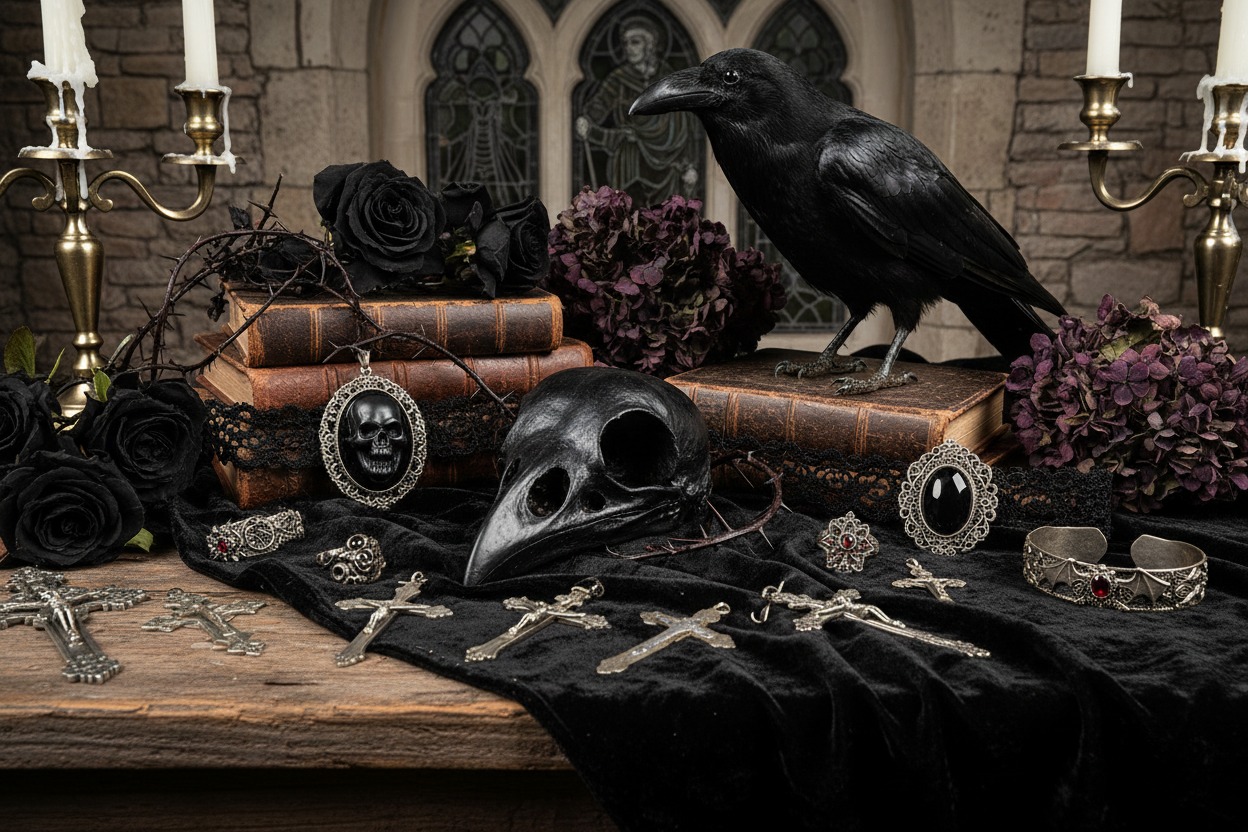
Visual cues from history and art provide the symbols many goths adopt today: black clothing, Victorian-inspired jewelry, crows, graveyard imagery, and theatrical makeup. Those symbols act as shorthand for belonging and a reflective worldview.
Goth personality traits through the OCEAN lens
One practical way to describe common personality trends among people who identify as goth is to use the OCEAN model (also called the Big Five): Openness, Conscientiousness, Extraversion, Agreeableness, and Neuroticism. These are general tendencies, not fixed rules.
Openness
Many goths score above average on openness to experience. They tend to value aesthetic exploration, symbolic thinking, and alternative cultures. Openness shows up as curiosity about art, literature, and varied musical genres, combined with a strong personal aesthetic that may change over time but is typically coherent.
Conscientiousness
A notable pattern is elevated conscientiousness in some goths. This looks like carefully curated outfits, orderly spaces, and attention to detail in art or journal writing. Conscientiousness helps many goths translate creative interests into work, education, or long-term creative projects.
Extraversion
Many goth-identifying people lean toward introversion. Social energy is often reserved for close friends and meaningful conversations. Public socializing can be draining, and large, loud gatherings may be avoided. That preference for quieter environments contributes to the love of nighttime aesthetics and intimate venues.
Agreeableness
Goth communities commonly emphasize acceptance and compassion. Because many goths have experienced social scrutiny, they tend to be protective of others and attentive to social justice issues. High agreeableness can sometimes make it hard to set boundaries with emotionally vulnerable friends.
Neuroticism
A higher tendency toward emotional sensitivity is often associated with goth identity, particularly among younger members. This can include greater awareness of sadness, anxiety, and existential concerns. At the same time, many goths learn to channel these feelings into creative work and personal growth.

Common interests and why they resonate
Certain motifs recur across goth culture because they mirror the emotional concerns goths find meaningful. The list below explains the attraction.
- Night and darkness: Nighttime offers quiet, solitude, and contrast—conditions that support introspection and aesthetic mood.
- Graveyards and cemeteries: These spaces provide contemplative scenery and a physical reminder of mortality, often prompting poetic reflection rather than morbidity.
- Poetry and solemn literature: Works that explore guilt, longing, and flawed humanity validate intense feelings and offer language for them.
- Horror and the uncanny: Fictional monsters and scary imagery allow safe confrontation of fear and taboo and can be empowering rather than purely shocking.
- Symbolic objects: Skulls, crosses, crows, and Victorian jewelry act as identity markers and conversation starters within the community.
Mental health and goth identity: risks and resilience
Discussions about goth and mental health must be careful not to conflate identity with illness. That said, patterns appear in research and community reports:
- Higher rates of reported depression among some goth teenagers compared to peers. Identification with goth aesthetics can correlate with greater reporting of depressive symptoms, especially in youth.
- Self-injury and suicidal ideation are more frequently disclosed in some goth communities. This reflects underlying distress, not an inherent feature of the subculture.
- Insomnia and night preference: Nighttime activities and rumination can worsen sleep cycles, which in turn can amplify mood instability.
- Protective factors: Community belonging, creative expression, and compassionate peer networks are significant sources of resilience within goth scenes.
Practical recommendations:
- Seek supportive connections within local or online communities that encourage healthy coping strategies rather than romanticizing suffering.
- Monitor sleep and routine. Maintaining consistent sleep supports emotional regulation even when nights are preferred.
- Use art as processing, not avoidance. Writing, music, and visual art can help process trauma when paired with intentional reflection or therapy.
- Ask for help early if feelings of hopelessness, self-harm urges, or suicidal thoughts occur. Professional help scales down risk and supports long-term creative life.
How goth identity develops over time
Goth identity often begins in adolescence but can persist and evolve into adulthood. Common trajectories include:
- Initial attraction driven by music, friends, or literature that reflects personal pain or curiosity.
- Identity consolidation where aesthetic choices, language, and social circles form a coherent self-description.
- Maturation in which neurotic tendencies tend to stabilize and goth interests integrate with career and family life.
- Long-term integration where individuals balance goth aesthetics with mainstream responsibilities—”corporate goth” is an example of this synthesis.

Practical checklist: Expressing goth identity while staying healthy
Use this checklist to keep creative expression and well-being aligned.
- Keep a daily sleep window: Aim for consistent sleep and avoid long-term night-only routines.
- Schedule creative time: Regular, planned time for writing, music, or fashion reduces rumination and turns emotion into output.
- Build a quality social circle: Choose friends who validate feelings and encourage care-seeking when needed.
- Set boundaries: Practice saying no to emotional labor that drains rather than supports.
- Seek professional support if depressive symptoms or self-harm behaviors appear or worsen.
Pitfalls and misconceptions
Several common mistakes distort public understanding of goth identity:
- Myth: Goth equals self-harm or suicidal intent. While higher rates of reported distress exist in some goth populations, the majority of goths are not actively self-harming or suicidal. Distress is a risk factor, not a defining trait.
- Myth: Goths are antisocial or violent. Many goths are compassionate and community-oriented; aggression is not a hallmark of the culture.
- Myth: Goth is a transient teenage phase. For many people goth identity lasts into adulthood, evolving rather than disappearing.
- Misunderstanding about aesthetics. Wearing black or enjoying horror does not imply endorsement of harm or nihilism. Often these are symbolic resources for meaning-making.
How to support a goth friend
If someone close to you identifies as goth and you want to be supportive, these approaches are effective:
- Listen without pathologizing: Validate feelings without immediately framing them as a disorder.
- Respect aesthetics: Clothing and art choices are meaningful. Ask questions rather than assuming intent.
- Encourage help when necessary: Offer to help find a therapist or go with them to appointments if they are open to it.
- Invite them to mixed activities: Offer social invitations that match their comfort level, such as small gatherings or creative meetups.

Practical style and identity tips for goths who want to keep life functioning
Balancing goth identity with work, family, and responsibilities is common. Here are practical strategies:
- Corporate goth: Adopt subtle elements of goth in workplace-appropriate ways, like dark but tailored clothing, minimal jewelry, and muted makeup.
- Time-box nocturnal interests: Allow late-night creativity in defined windows so daytime functioning remains consistent.
- Curate rather than collect: Prioritize high-quality pieces or meaningful items to avoid overwhelm from clutter.
- Use goth aesthetics intentionally: Let clothing, music, and decor serve emotional regulation and identity affirmation rather than isolation.
Resources: where to learn more or get help
Trusted next steps include local mental health services, community arts programs, and reputable books on Gothic literature and music history. If immediate crisis assistance is needed, contact local emergency services or a crisis hotline.
FAQs
Are goths depressed by definition?
No. Goth identity is not the same as clinical depression. Some goths report higher rates of depressive symptoms, but many are emotionally healthy and use goth art and community to process difficult feelings constructively.
Is goth the same as emo or punk?
They are distinct subcultures with overlapping influences. Punk emphasizes rebellion and often anti-establishment behavior. Emo focuses on emotional expression tied to punk roots. Goth emphasizes atmospheric darkness, romantic melancholy, and historically draws from Gothic literature and post-punk music.
Can goth identity be maintained while having a professional career?
Yes. Many people successfully integrate goth aesthetics with professional life through subtle styling choices and compartmentalizing certain expressions for private spaces while maintaining workplace norms.
How can goth aesthetics help mental health?
Aesthetic expression provides language for emotion, community for belonging, and creative outlets for processing. These benefits can support well-being when combined with healthy coping strategies and professional care when necessary.
Where do I start if I’m interested in goth culture?
Start with the music and literature that resonate. Explore Gothic fiction, post-punk and darkwave bands, and local or online communities. Focus on what feels authentic rather than adopting clichés.

Summary and final takeaways
Goth identity is an expressive, emotionally rich subculture grounded in historical aesthetics and modern creativity. It often correlates with certain personality trends—higher openness, careful conscientiousness, introversion, compassion, and emotional sensitivity—but these are tendencies, not rules. The subculture can present mental health risks for some, especially younger members, yet it also contains powerful sources of resilience: community, art, and honest emotion. Understanding goth identity means recognizing both its aesthetic power and its emotional depth while supporting healthy coping and help-seeking when needed.