

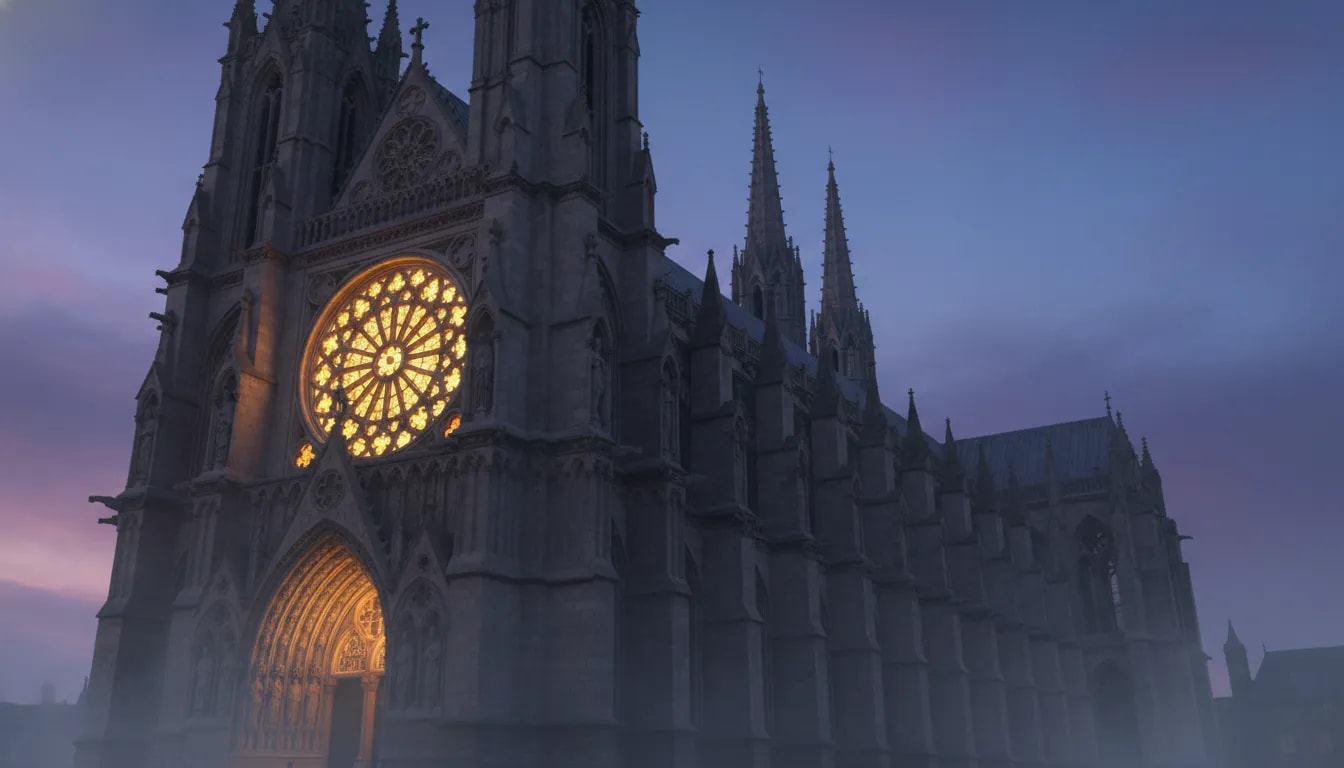
Gothic architecture is the dominant style of large churches and cathedrals built in Europe from the mid-12th century into the 16th century and then revived periodically after that. It is instantly recognizable by its emphasis on verticality, light-filled interiors, and intricate ornament. Understanding the engineering principles and visual cues that define Gothic buildings makes it easy to identify them on sight and appreciate their technical innovations and cultural purpose.
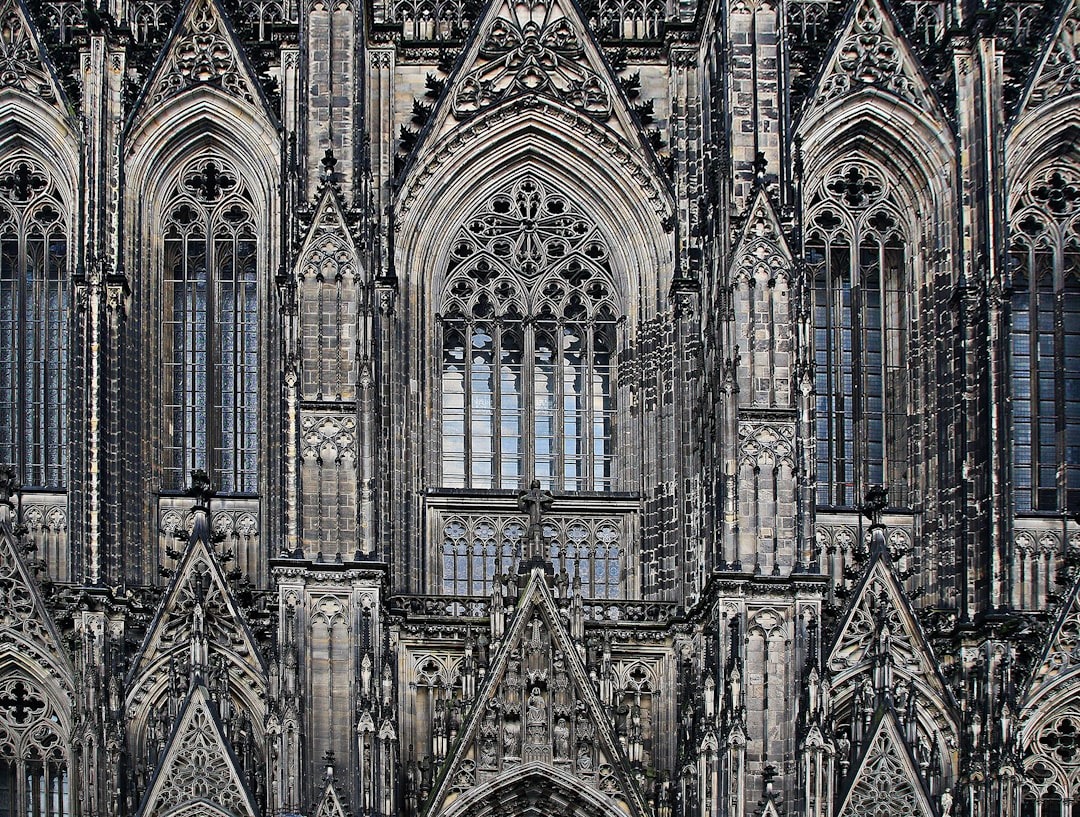
Table of Contents
- What is Gothic architecture and why it matters
- Core structural innovations that define Gothic buildings
- Ornament and storytelling: form with meaning
- Regional styles and variations
- Timeline: rise, decline, and revival
- How to identify a Gothic cathedral: quick checklist
- Common misconceptions and pitfalls
- Practical tips for visiting and photographing Gothic cathedrals
- Summary: why Gothic still matters
- FAQ
Affiliate Disclosure: Some articles on this site contain affiliate links. This means that if you choose to make a purchase through certain links, Grim Aesthetic may earn a small commission at no additional cost to you. We only reference products, books, or tools that align with our aesthetic philosophy and values. Commissions support the continued creation of thoughtful, independent content. Thank you for supporting intentional work.
What is Gothic architecture and why it matters
Gothic architecture is a structural and decorative approach developed to build larger, taller, and more luminous sacred spaces than earlier medieval styles allowed. It mattered because it combined advances in masonry, geometry, and structural logic to transform walls from solid enclosures into screens for light and narrative art. Cathedrals built in this style served not only as places of worship but as community hubs, teaching tools, and displays of civic pride.
The style also represents a significant moment in the history of building technology. Gothic builders solved complex problems of weight and thrust so that enormous windows and lofty vaults could coexist with durable stone construction. The result is a distinctive silhouette and interior experience that still influence architecture today.
Core structural innovations that define Gothic buildings
Several engineering advances are essential to Gothic architecture. Together they reduce the need for heavy load-bearing walls and allow the creation of tall, open interiors. The main innovations are the pointed arch, the ribbed vault, and the flying buttress. Each is explained below with practical implications for form and function.
Pointed arch: how shape controls weight
The pointed arch is the most fundamental structural element associated with Gothic design. Unlike a semicircular arch, a pointed arch channels compressive forces more directly down into supporting piers. That efficiency lets builders span larger openings and build higher without proportionally increasing the mass of the supporting structure.
Practical effect:
- Higher windows and doorways that do not require thick masonry to resist collapse.
- Greater flexibility in vault geometry because two arches of different heights can meet cleanly at a ridge.
- Visual emphasis on vertical lines, contributing to the impression of height.

Ribbed vault: concentrating loads and freeing space
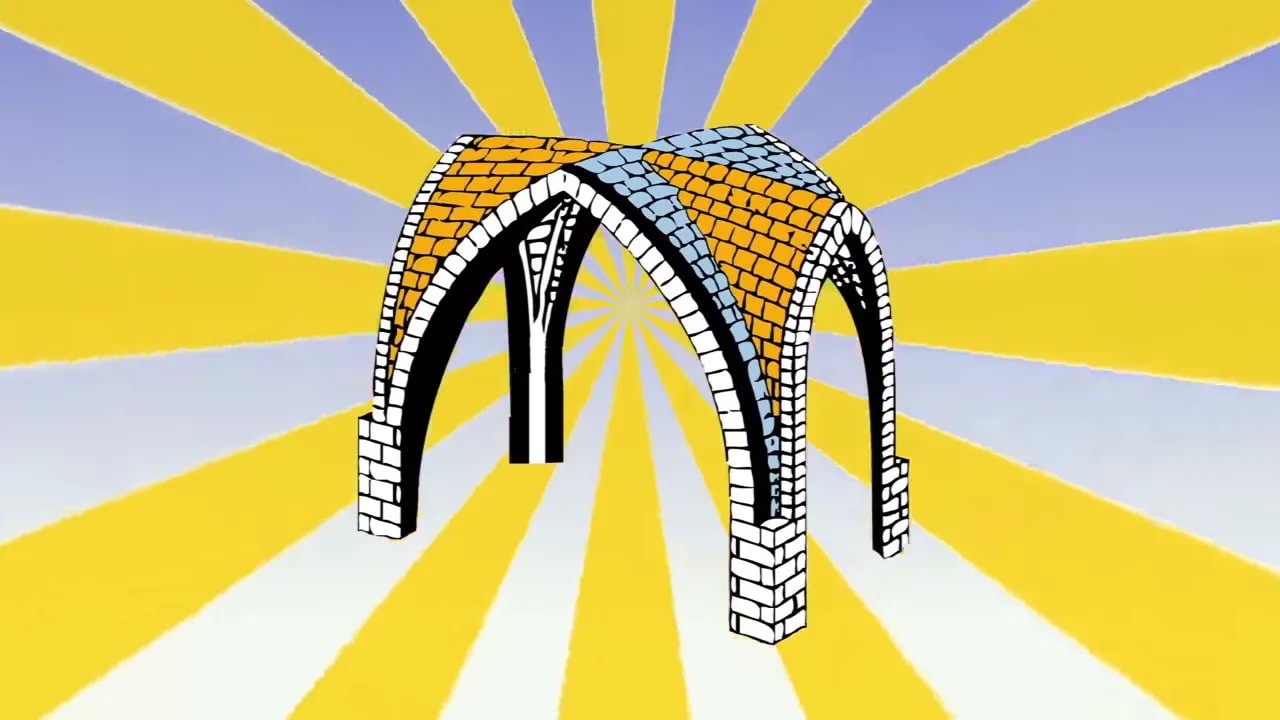
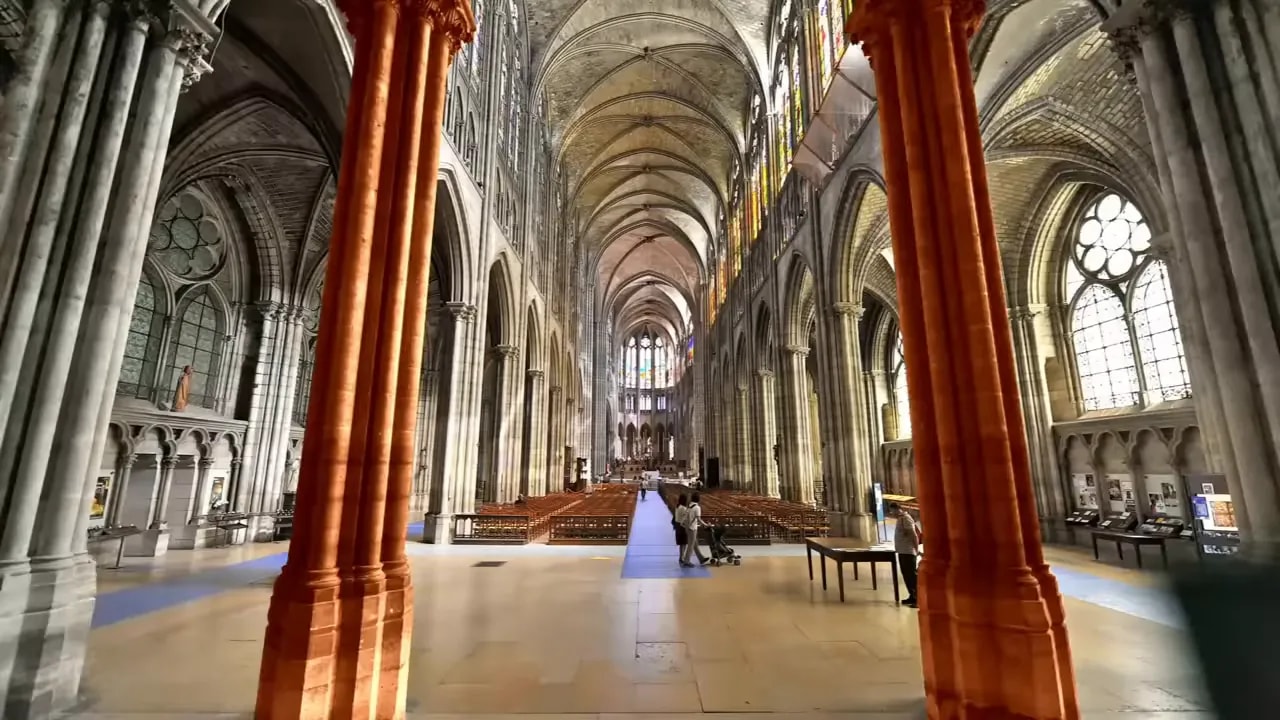
A ribbed vault is formed when a network of intersecting ribs carries the vault’s weight, allowing the infilling stone or lighter material between ribs to be thinner and lighter. The ribs act like a skeleton for the ceiling, concentrating loads to specific points where piers and columns can take them.
Practical effect:
- Fewer interior columns are necessary, creating a more open nave and clearer sightlines.
- When combined with pointed arches, ribbed vaults allowed for more complex floor plans and taller vaults without excessive bulk.
- Ribs provided decorative lines that enhanced the visual rhythm of interiors.
Flying buttress: moving lateral forces outside
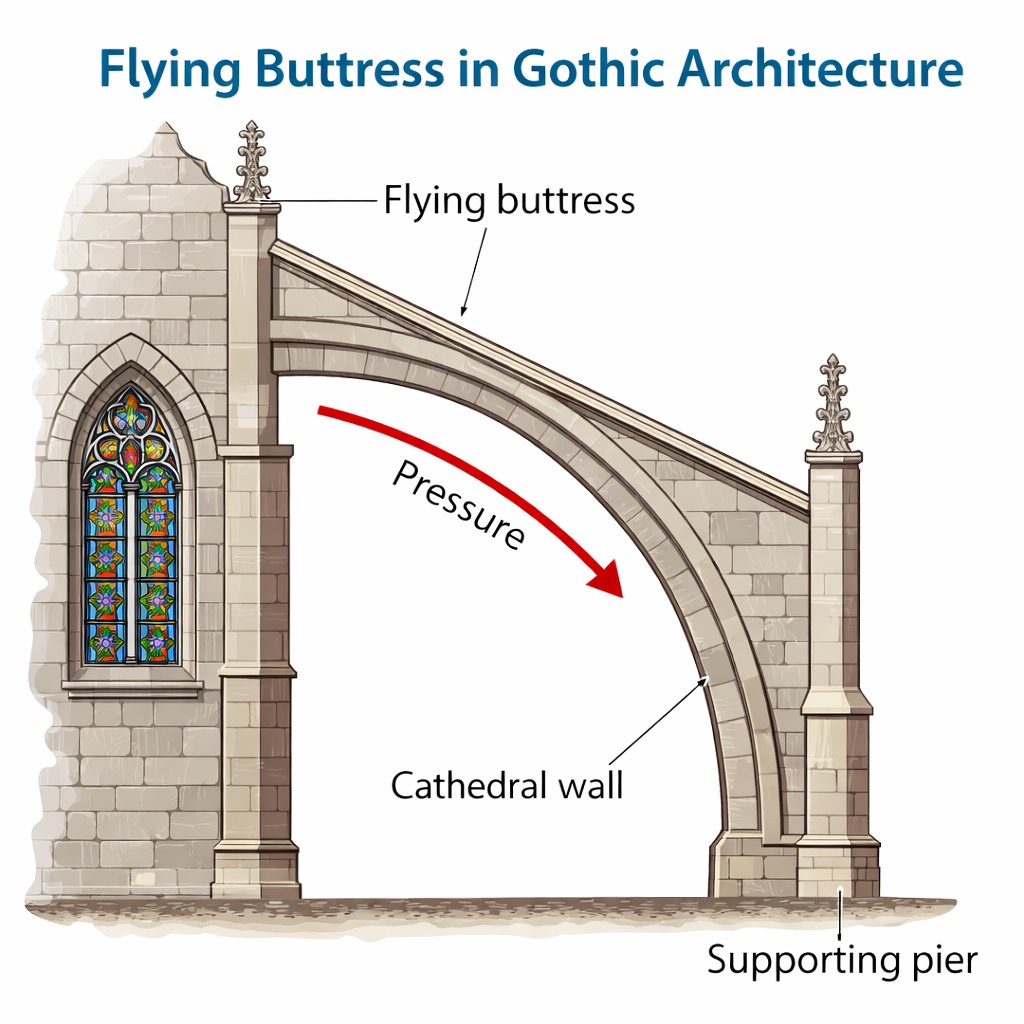
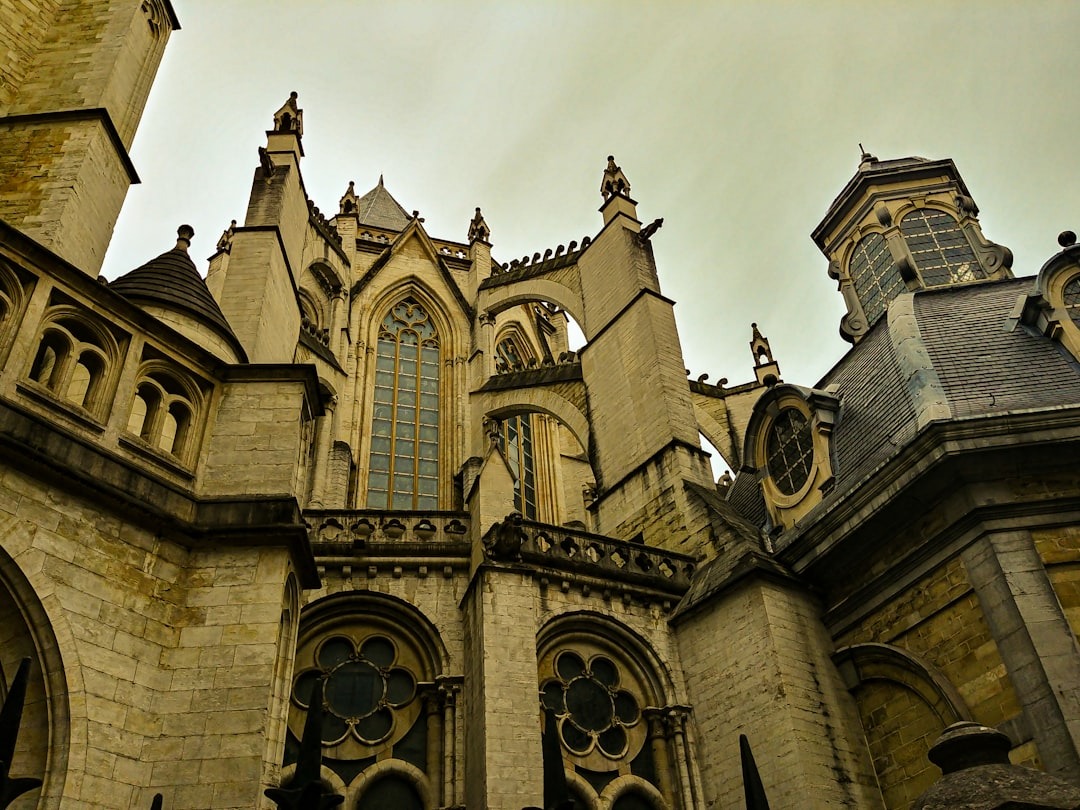
The flying buttress is an external arch that transfers lateral thrust from the upper walls and vaults across an open space to a distant pier or buttress. This innovation decouples the roof and vault loads from the lower wall, so walls no longer need to be massive to resist outward forces.
Practical effect:
- Exterior buttressing makes upper walls thinner and enables large stained glass windows.
- Buttresses create the characteristic silhouette of pinnacles, arches, and openwork on the building’s exterior.
- They allowed the nave to be built taller while maintaining structural stability.
Slender piers and clustered columns
Because ribbed vaults concentrate loads at specific points, interior supports evolved from broad masonry walls to slender, clustered columns and compound piers. These vertical supports often contain multiple shafts or engaged columns around a central core to distribute loads from different vault ribs.
Practical effect:
- Taller, more elegant interior proportions with long vertical lines.
- Flexibility in aligning vault bays and fenestration to form coherent rhythmic sequences.
- Space that feels lighter and less boxed-in, enhancing the spiritual atmosphere.
Clerestory and stained glass: light as material
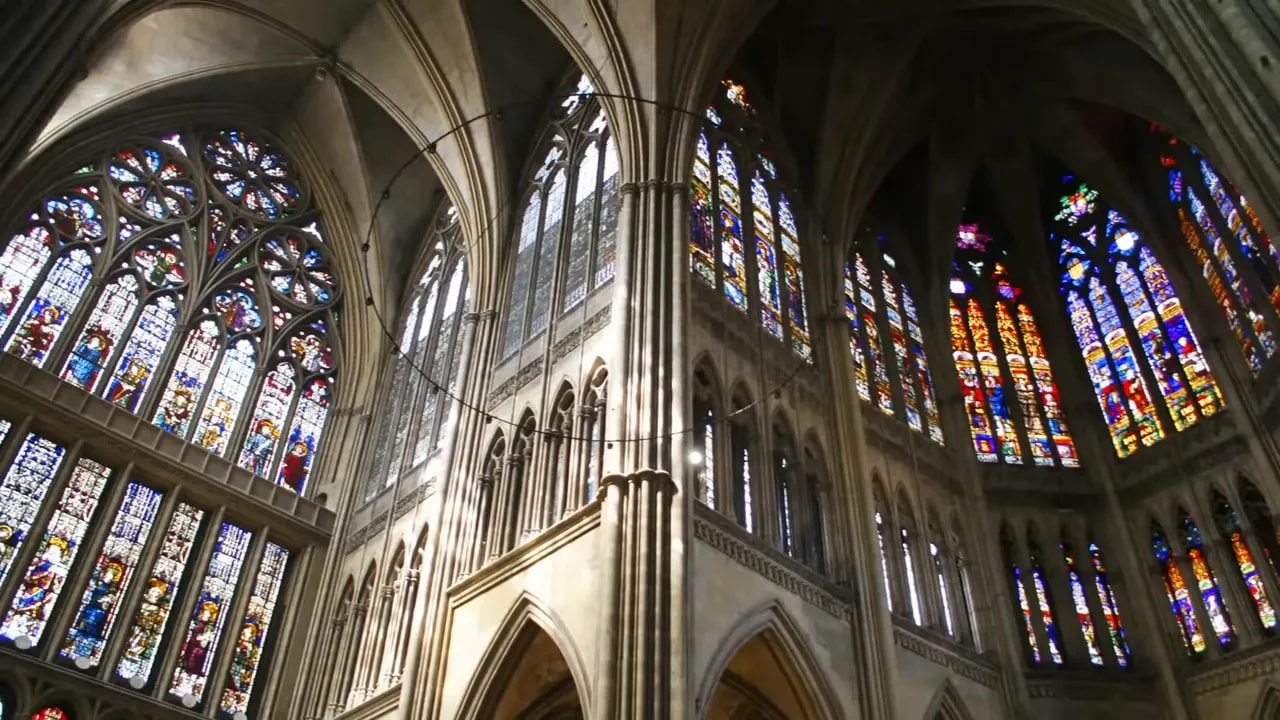
Removing weight-bearing responsibilities from walls created an opportunity: fill them with glass. The clerestory is the high row of windows that admits daylight into the nave. Gothic cathedrals used large stained glass windows to create an interior filled with colored light, which was understood as an encounter with the divine.
Practical effect:
- Extensive stained glass panels and small lancet windows replaced solid wall surface.
- Light became a primary design element, shaping color and atmosphere inside.
- Windows often conveyed biblical stories and didactic imagery for congregations who could not read.
Ornament and storytelling: form with meaning
Gothic ornament is not pure decoration. It communicates, instructs, and identifies. Sculptural programs, rose windows, and carved details worked together to tell biblical stories, represent saints and patrons, and reinforce doctrinal messages.
Rose windows and tracery
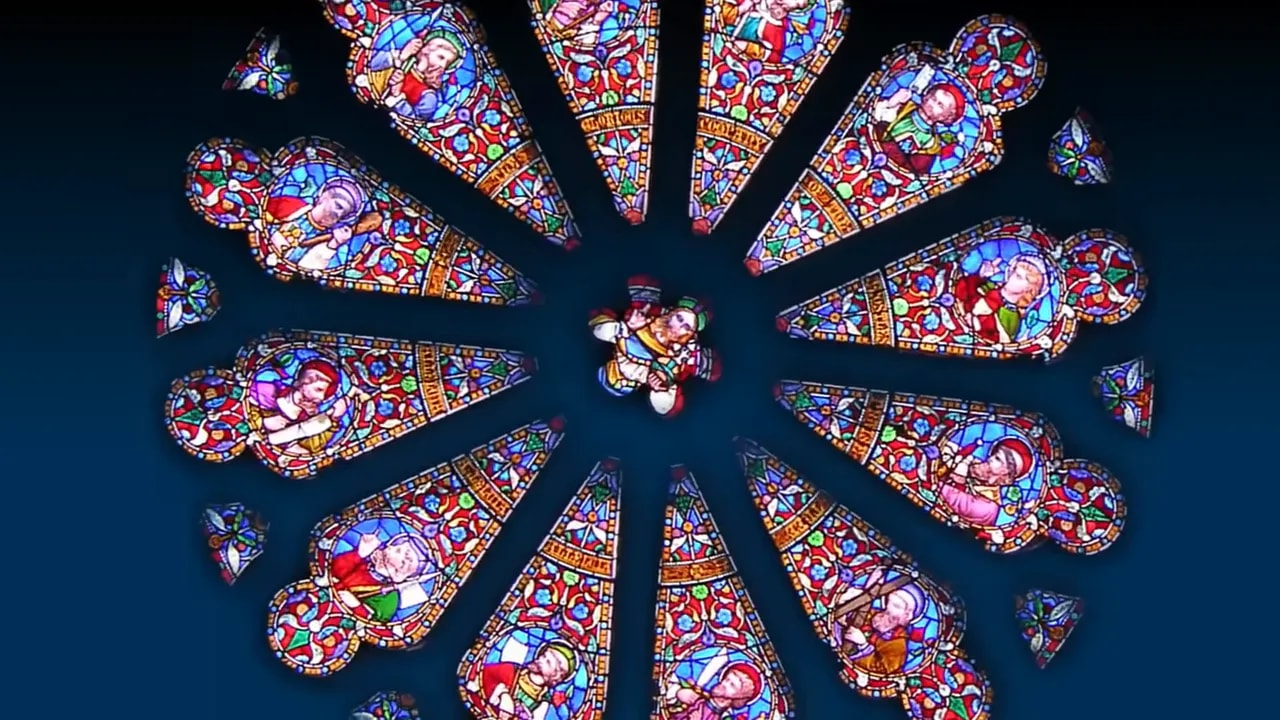
A rose window is a circular stained glass window with radial tracery that often occupies the gable above a major entrance or the transept facade. Rose windows combine geometry and iconography to present theological themes in a richly symbolic format.
Tracery is the stone latticework that divides window glass into decorative patterns. As tracery became more elaborate, windows filled larger wall surfaces without sacrificing structural integrity.
Sculpture, portals, and the didactic program
Portal sculpture frames the entrances with scenes from scripture, the lives of saints, and moral allegories. These carved programs served a didactic function at a time when most people were illiterate. Capitals, jamb figures, and tympanum panels formed a continuous visual catechism from the exterior into the interior.
Gargoyles and waterspouts
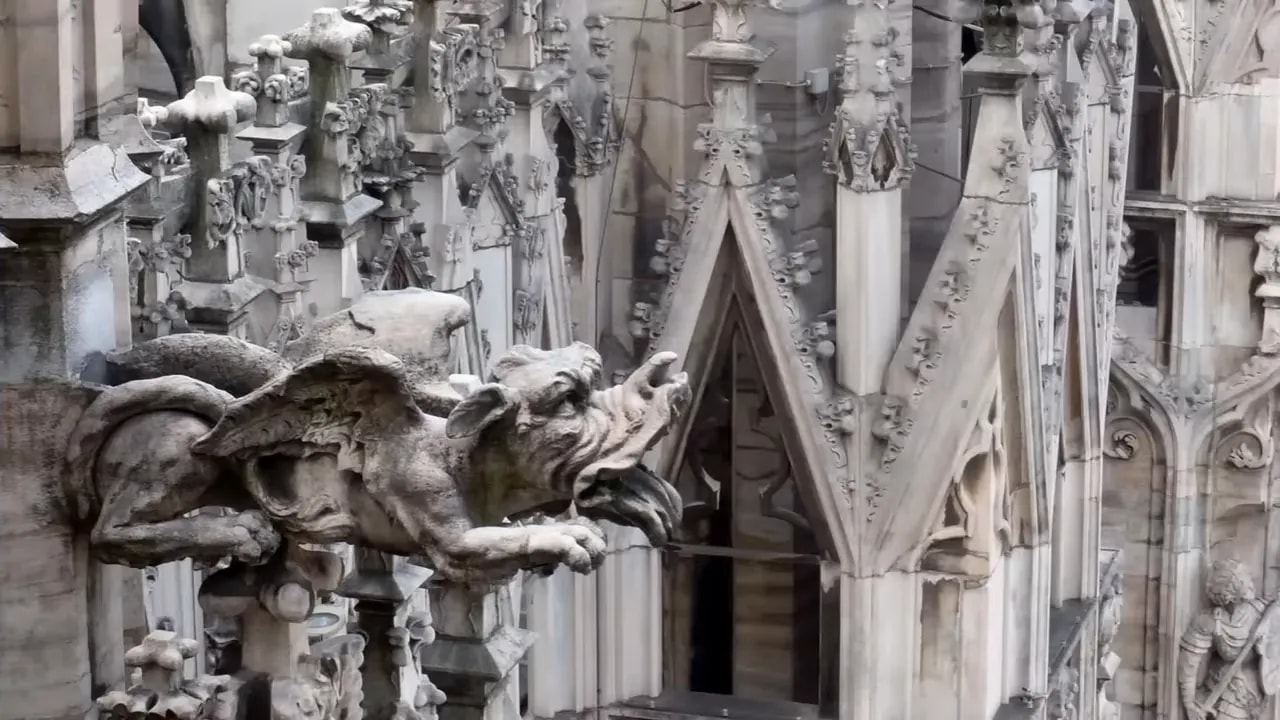
Gargoyles are carved waterspouts that channel rain away from the building fabric to prevent mortar erosion. Beyond their utilitarian role, grotesques and chimeric carvings act as boundary markers between the sacred and the profane and were believed to protect the structure spiritually.
Regional styles and variations
Gothic architecture spread across Europe and adapted to local materials, traditions, and aesthetic preferences. Key regional variants include:
- French Gothic — The origin point. Characterized by ambitious height, clear structural expression, and large stained glass schemes. Examples include the early high-gothic cathedrals that set the template for later development.
- English Gothic — Tends toward a longer, more horizontal emphasis in plan and massing with distinct phases: Early English, Decorated, and Perpendicular. Perpendicular Gothic emphasizes strong vertical and horizontal grid lines in window tracery.
- Italian Gothic — Often retains more wall mass and polychrome facades with colored marble; windows are generally smaller and ornament is more pictorial and surface-based.
- German and Central European Gothic — Varies widely, sometimes integrating local timber traditions or regional vaulting systems; many civic buildings and town halls adopted Gothic vocabulary.
Timeline: rise, decline, and revival
Gothic architecture emerged in the mid-12th century and became the dominant cathedral and church-building language through the late medieval period. Around the late 15th and early 16th centuries, Renaissance classicism began to replace Gothic principles in many parts of Europe. However, Gothic forms returned in the 18th and 19th centuries in the Gothic Revival movement, particularly for churches, universities, and civic architecture. Revival work reinterpreted medieval forms with modern construction or romanticized historic aesthetics.
How to identify a Gothic cathedral: quick checklist
When assessing whether a building is Gothic, look for the following visible features:
- Pointed arches in windows, doors, and vaults.
- Ribbed vaulting on the ceiling with ribs concentrating at columns.
- Flying buttresses or visible external arches carrying roof thrust.
- Large stained glass windows, often with tracery and rose windows.
- Clustered or compound piers and slender vertical columns.
- Extensive sculptural decoration around portals and facades.
- Gargoyles or waterspouts projecting from rooflines.
Common misconceptions and pitfalls
- Gothic does not mean dark or gloomy. Historically, Gothic interiors aimed for luminosity and uplifting spatial qualities.
- Pointed arches alone do not define Gothic. Pointed arches predate High Gothic in multiple traditions. The defining set is a combination of arches, ribbed vaults, buttresses, stained glass, and the overall structural system.
- Not every tall church is Gothic. Height can be achieved in other styles; verify structural features and decorative language.
- Gothic is not homogeneous. Regional materials and local craft traditions significantly affect appearance. Stone color, tracery style, and proportions vary widely.
Practical tips for visiting and photographing Gothic cathedrals
- Arrive at different times of day to see how light changes the stained glass and interior mood. Morning and late afternoon can emphasize colors differently.
- Look up first. The vaults, ribs, and clerestory reveal structural logic better than ground-level details.
- Study the facade. Portal sculpture and the rose window often narrate the program of the building and the community that built it.
- Bring a wide-angle lens for interiors and a telephoto to capture traceries and sculptural details on facades.
- Respect conservation rules — many historic cathedrals restrict flash, tripods, or close access to fragile features.
Summary: why Gothic still matters
Gothic architecture represents an important leap in combining structural engineering with symbolic and narrative art. Its innovations allowed buildings to become both technically ambitious and richly communicative. Recognizing the interplay between pointed arches, ribbed vaults, flying buttresses, and light-filled windows will help anyone identify Gothic buildings and understand their lasting cultural significance.
FAQs
When did Gothic architecture begin and where?
Gothic architecture began in the mid-12th century, with key early developments taking place in northern France. It evolved from Romanesque precedents and spread across Europe over the following centuries.
How is Gothic different from Romanesque architecture?
Romanesque architecture relies on heavy masonry walls, semicircular arches, and relatively small windows. Gothic uses pointed arches, ribbed vaults, and external buttressing to allow thinner walls and much larger windows.
Are all cathedrals with tall towers Gothic?
No. Tall towers and spires appear in many styles. A cathedral is Gothic when its structural system and decorative program align with Gothic principles such as pointed arches, ribbed vaults, flying buttresses, and large stained glass windows.
What is the purpose of tracery in Gothic windows?
Tracery is the stone framework that subdivides a window into decorative shapes, supporting glass and creating patterns that distribute loads while enhancing visual complexity.
Why are Gothic churches so tall?
Height was both symbolic and practical. Verticality aimed to evoke the heavens and direct attention upward. Structurally, innovations like pointed arches and flying buttresses made greater heights feasible without excessive wall mass.
What was the Gothic Revival?
The Gothic Revival was a 19th-century movement that reintroduced and adapted Gothic forms for new buildings such as churches, universities, and civic structures. It often combined medieval motifs with modern construction methods.