


Photo by Niko Tsviliov on Unsplash
Goth is a word with several meanings. It can refer to ancient Germanic peoples, medieval architecture, fiction and horror cinema, a fashion language, and a youth subculture. In music, however, goth is not simply dark clothing, dramatic makeup, or morbid imagery. Gothic rock developed a recognizable musical identity through atmosphere, sparse guitar work, echo, theatrical vocals, uneasy lyrics, and a fascination with darkness in both emotional and cinematic forms.
The history of goth music did not begin with one band or one perfectly isolated scene. It emerged from decades of artists experimenting with horror, alienation, theatricality, drones, electronic minimalism, and post-punk intensity. By the time Bauhaus released “Bela Lugosi’s Dead” in 1979, many of goth’s essential ingredients had already been explored.
This guide explains where goth music came from, what separates it from adjacent styles, why Bauhaus became so important, and where to begin when building a deeper understanding of gothic rock.
Table of Contents
- What Is Goth Music?
- The Core Musical Traits of Gothic Rock
- Before Gothic Rock Had a Name
- Shock Rock, Glam Rock, and Horror as Performance
- Electronic Minimalism and the Fear of Empty Space
- Why Post-Punk Was the Crucial Turning Point
- Why “Bela Lugosi’s Dead” Became a Goth Landmark
- Goth Music vs. Goth Fashion: Why the Difference Matters
- A Beginner’s Listening Path Through Goth History
- Common Misconceptions About Goth Music
- How Goth Continued to Change
- Key Takeaway
- Frequently Asked Questions
What Is Goth Music?
Goth music is a dark, atmospheric branch of post-punk that developed most clearly in Britain during the late 1970s and early 1980s. Its sound often favors mood and tension over conventional rock excess. A goth track may use repetitive basslines, sharp or minimal guitar figures, roomy drum patterns, reverberation, drum machines, synthesizers, and vocals that range from commanding baritones to ghostly, expressive cries.
Common lyrical territory includes:
- Death and mortality
- Romantic obsession and emotional isolation
- Horror, vampires, ritual, and gothic fantasy
- Alienation, dread, desire, and spiritual unease
- Dreamlike or symbolic imagery
There is no single formula. Some goth songs are danceable and propulsive, while others are slow, spacious, and severe. What ties the genre together is a shared sense of dark romanticism and an interest in making atmosphere central to the music.
That distinction matters because a goth appearance does not automatically make an artist goth. Marilyn Manson, My Chemical Romance, AFI, and other artists have used black clothing, makeup, horror imagery, or theatrical presentation, but their music belongs primarily to other traditions. Goth is a sonic and cultural lineage, not a generic label for anything gloomy.
For a wider explanation of the word beyond music, read Goth Explained: From Ancient Tribes to the Modern Subculture.
The Core Musical Traits of Gothic Rock
Gothic rock was shaped by a collection of techniques that were already appearing across blues, psychedelic rock, glam, punk, experimental music, and post-punk. These traits became increasingly concentrated during the late 1970s.
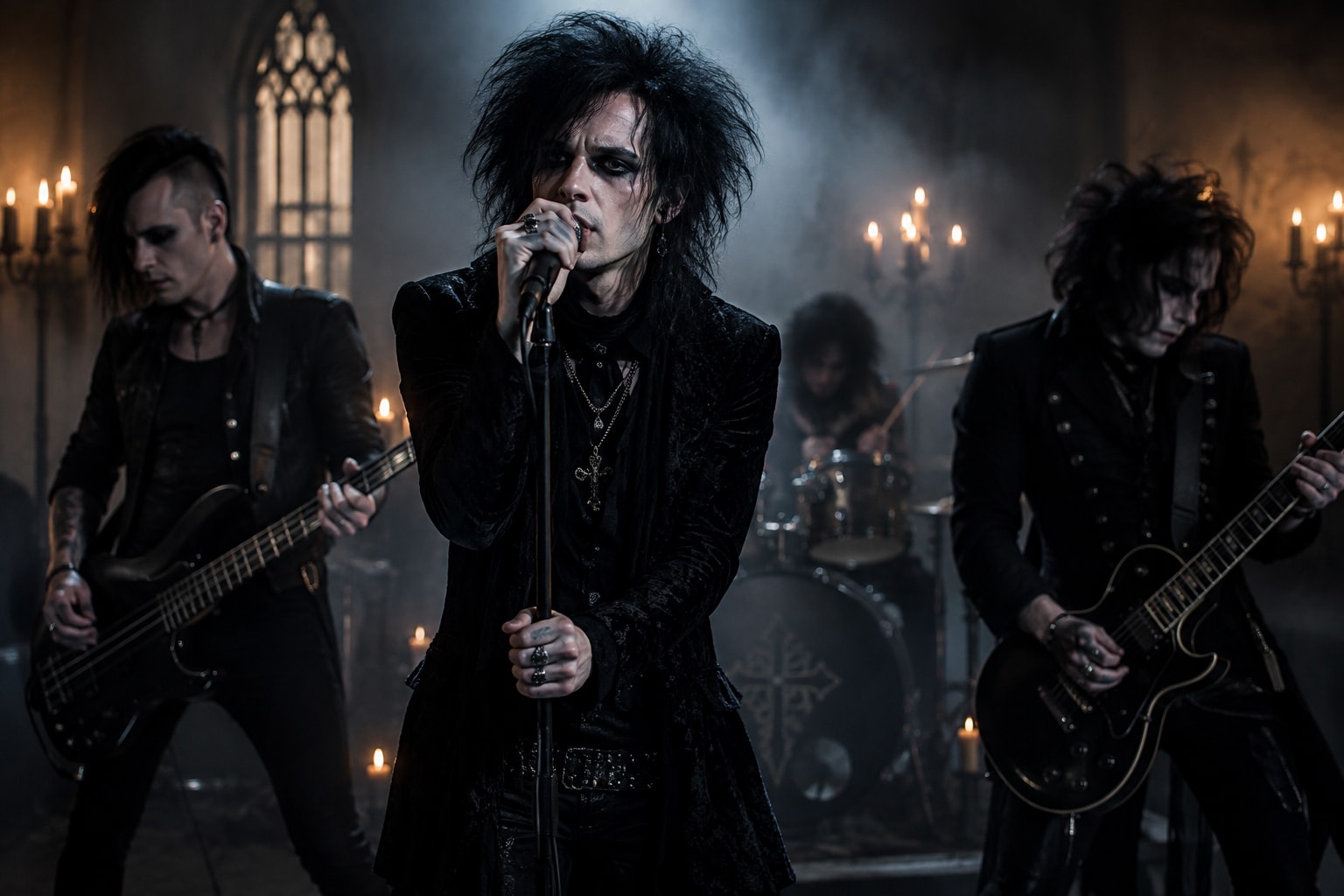
Atmosphere over virtuosity
Goth often uses relatively simple parts arranged for maximum tension. Instead of filling every moment with notes, the music leaves space for reverb, silence, sustained tones, and rhythm. This can make a song feel cavernous, ritualistic, or claustrophobic.
Droning and minimal guitar
Many early goth and proto-goth recordings use guitars less as flashy lead instruments and more as texture. A repeated chord, scraping rhythmic figure, or drone can create unease without relying on heavy metal riffing.
Prominent bass and stark rhythm
Basslines frequently carry a song’s momentum. Drums may sound dry and skeletal or heavily echoed, while drum machines and pulsing electronic beats provide a mechanical, nocturnal feel. This helped make goth closely connected to the dance floor even when its themes were bleak.
Theatrical, detached, or sonorous vocals
Goth vocal styles are broad. Some singers use a commanding baritone, while others use icy restraint, shrieks, whispers, or dramatic phrasing. The shared quality is expressive intent: the voice is often part of the atmosphere rather than merely a vehicle for a catchy lyric.
Macabre and romantic imagery
Goth lyrics may invoke monsters, ruins, death, desire, religious symbols, or surreal dreams. Yet the genre is not defined only by horror references. The more important trait is its ability to make emotional pain, beauty, theatricality, and darkness coexist.
Before Gothic Rock Had a Name
Long before the term “gothic rock” settled around a distinct post-punk sound, several artists established the aesthetic and musical vocabulary that later goth bands would expand.
Screamin’ Jay Hawkins and the birth of dark theatricality
Screamin’ Jay Hawkins’s 1956 recording of “I Put a Spell on You” was an early landmark in the use of theatrical darkness in popular music. The performance transformed a blues song into something wild, confrontational, and almost supernatural. Hawkins did not just sing the song. He performed possession, obsession, and menace through screams, groans, and exaggerated vocal character.
His stage presentation reinforced the idea. Coffin entrances, capes, dry ice, and theatrical horror made performance itself part of the music’s meaning. Later shock rock artists, including Alice Cooper and Marilyn Manson, drew from this tradition of deliberate spectacle.
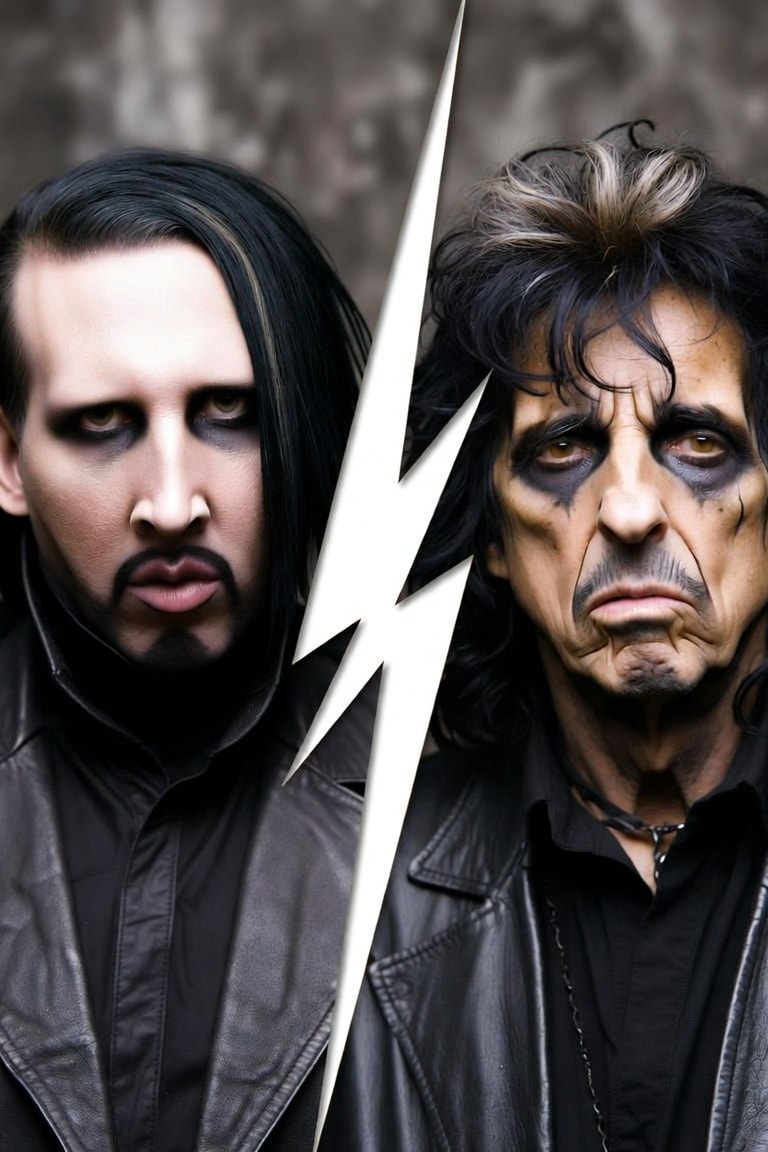
Hawkins was not a goth musician in the later genre sense. Still, his work demonstrated an idea that would become fundamental to goth: darkness could be expressive, stylish, strange, and emotionally powerful rather than simply comedic or taboo.
The Doors and the gothic rock label
The Doors introduced a different strain of darkness. Their music combined poetic lyrics, extended structures, ominous organ, jazz-influenced drumming, and Jim Morrison’s low, dramatic voice. “The End,” from the group’s 1967 debut album, moved far beyond conventional pop songwriting with its slow-building tension and confrontational meditation on death, sexuality, and breakdown.
The Doors were among the earliest groups described in print as “gothic rock” in 1967. That early usage did not mean they sounded like Bauhaus or the Sisters of Mercy. It recognized the ominous intensity of their music and Morrison’s theatrical, darkly poetic persona.
Morrison’s deep vocal delivery also became a useful template for later singers. Ian Curtis of Joy Division and Andrew Eldritch of the Sisters of Mercy are often associated with the kind of resonant, commanding vocal presence that Morrison helped popularize.
The Velvet Underground and the beauty of the drone
The Velvet Underground supplied another essential ingredient: musical repetition as atmosphere. Songs such as “Venus in Furs” and “All Tomorrow’s Parties” combined drones, unusual guitar tuning, pounding piano, stark rhythm, and shadowy subject matter. Their work felt detached from the bright, romantic norms of much 1960s pop.
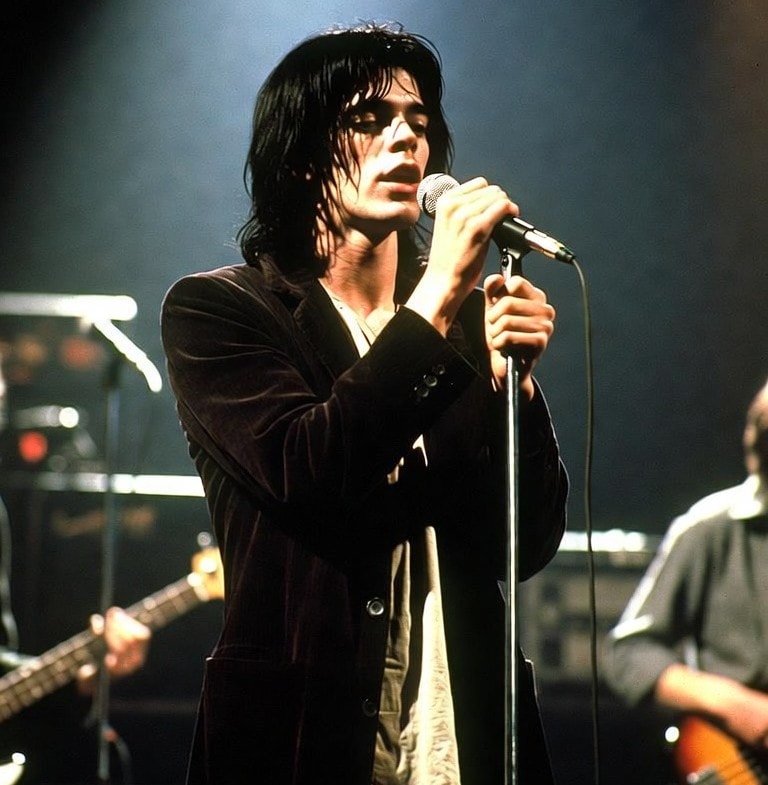
“Venus in Furs” explored sadomasochistic imagery, while “All Tomorrow’s Parties” offered an unsettling social portrait. Both tracks made darkness feel literary, stylish, and musically immersive. Their influence reaches across punk, art rock, no wave, shoegaze, and goth.
The group’s guitar drone was especially important. Lou Reed’s “ostrich guitar” approach, in which all strings are tuned to the same note, created a dense, sustained texture. This kind of repetition would become a powerful tool for later post-punk and goth musicians.
Nico and the colder, more internal side of goth
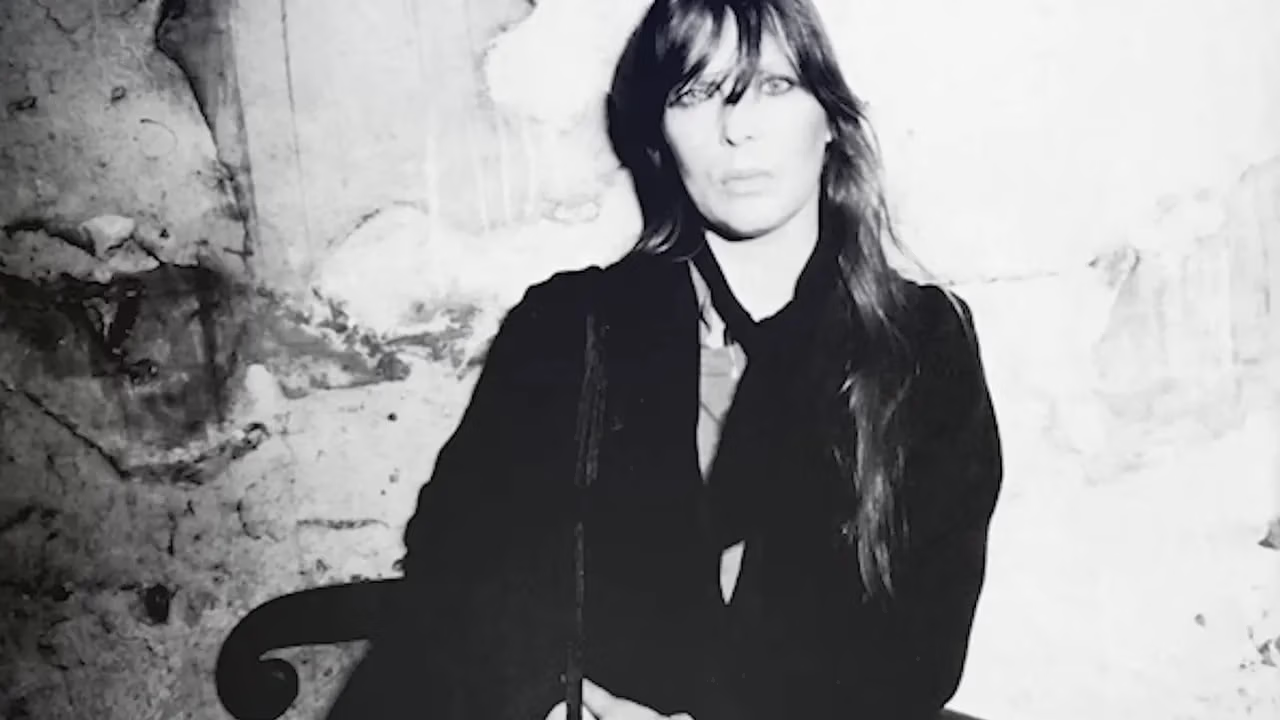
Nico’s work with the Velvet Underground and her later solo recordings helped establish a more austere form of dark music. Her voice, low and stark, could make even simple melodies feel remote and monumental. Her 1968 album The Marble Index is particularly important as proto-goth.
Rather than following folk or conventional rock structures, The Marble Index built an isolated world from harmonium, viola, piano clusters, unusual percussion, and Nico’s distinctive voice. The album’s bleak beauty, minimalism, and emotional distance anticipate the atmospheric side of later goth.
Nico’s presentation also became influential. Around this period she wore black and dyed her hair red, moving away from an earlier glamorous public image toward something more severe and self-defined. This made her a key figure in the development of the modern goth aesthetic as well as its sound.
Shock Rock, Glam Rock, and Horror as Performance
Goth’s later visual language did not come from post-punk alone. It also inherited a great deal from shock rock and glam rock, where makeup, theatrical costumes, sexual ambiguity, and carefully constructed personas were already central.
Alice Cooper and the power of horror theater
Alice Cooper modernized the theatrical darkness associated with Screamin’ Jay Hawkins. During the 1970s, Cooper’s performances used capes, makeup, staged violence, and imagery of execution or mutilation. The goal was not realism. It was theatrical horror, designed to turn a rock performance into a disturbing spectacle.
The music also showed how morbid themes could support storytelling. “Dead Babies,” from the 1971 album Killer, uses sound effects and dramatic arrangement to create a grim, cinematic narrative about parental neglect. Its title and presentation were controversial, but the point was social horror rather than celebration.
Cooper’s influence can be heard in later shock rock, horror punk, and goth-adjacent performance. His work showed that darkness could be a complete artistic world involving lyrics, stagecraft, costume, lighting, and persona.
Glam rock gave goth permission to look artificial
Glam rock did not share goth’s gloom, but it established many visual possibilities later adopted by goth culture. Artists such as David Bowie, Roxy Music, and T. Rex embraced cosmetics, stylized clothing, ambiguity, and performance personas that challenged ordinary ideas about gender and presentation.
Goth retained glam’s willingness to be visibly constructed, but traded glitter for black clothing, pale foundation, sharper silhouettes, and a more funereal mood. The relationship is not simply visual. Roxy Music’s “In Every Dream Home a Heartache” and Brian Eno’s “Third Uncle” also offered unsettling, mechanical, or sinister musical ideas that later post-punk artists could develop.
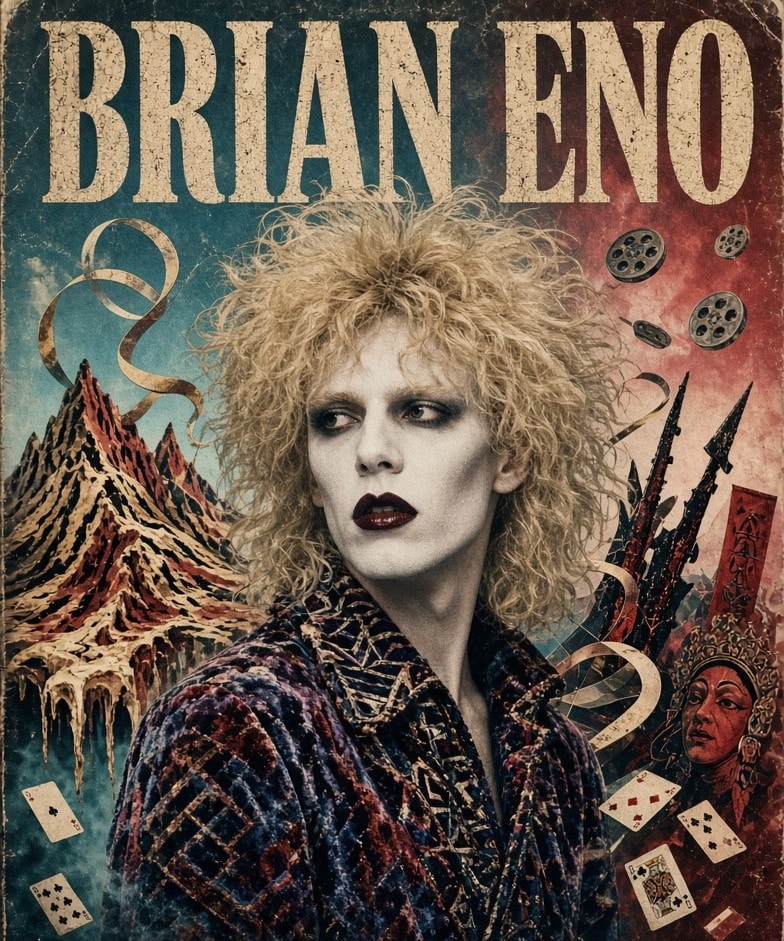
Brian Eno’s work is especially revealing. “Third Uncle” pairs a tense, almost mechanical beat with clipped guitars and a hypnotic vocal approach. Its restless, angular sound points toward the kind of rhythmic severity later found in Joy Division and Bauhaus.
Electronic Minimalism and the Fear of Empty Space
Goth did not grow only from guitar bands. Early electronic experimentation was equally important because it taught later artists how to make minimal arrangements feel frightening, physical, and immense.
Suicide and the use of machines
New York duo Suicide used synthesizers, drum machines, repetition, and extreme vocal performance to create music that was radically different from standard punk. Their 1977 debut album stripped rock down to a pulsing electronic core.
“Frankie Teardrop” is one of the most disturbing records in this lineage. Built around a minimal beat and insistent synth pulse, it tells a brutal story of poverty, violence, and psychological collapse. Alan Vega’s voice shifts between agitated crooning and terrifying screams, while dub-style reverb makes the sound feel even more unstable.
Suicide’s importance to goth is not that the duo should be treated as a conventional goth band. Their importance lies in methods: drum machines, synthesizers, sparse arrangements, echo, repetition, and an emotionally extreme vocal performance. These tools became central to many goth, industrial, and darkwave records.
The Cramps and horror as total commitment
The Cramps approached darkness from another direction. Their psychobilly style fused distorted rockabilly with B-movie horror, trash culture, and exaggerated performance. “Human Fly” treated its monster-movie premise with complete commitment rather than novelty detachment.
This was significant because it helped create a bridge between punk and horror aesthetics. The Cramps made obscure horror references, distorted rock and roll, sexuality, and camp theatricality feel inseparable. That sensibility would continue through horror punk and influence goth-adjacent artists for decades.
Why Post-Punk Was the Crucial Turning Point
Punk made it possible for artists to reject mainstream standards of polish, genre rules, and appearance. It validated anger, DIY methods, and personal style. But goth emerged when musicians began taking punk’s energy into darker, more spacious, and more experimental territory.
Post-punk bands slowed down, opened up their arrangements, embraced dub, funk, electronics, art rock, and studio experimentation, and made mood a central concern. Gothic rock is best understood as a close relative of post-punk rather than an entirely separate invention.
Siouxsie and the Banshees
Siouxsie and the Banshees began within British punk but quickly moved beyond punk’s most obvious musical limits. Their songs used unfamiliar textures, more varied rhythms, and arrangements that did not rush toward a straightforward climax. Siouxsie Sioux’s striking makeup and black hair became visually influential, but the music mattered just as much.
The band’s later work, especially Juju, moved close to the gothic rock world through tense guitar lines, dramatic vocals, and an intense, nocturnal atmosphere. Their influence on later goth artists is substantial, including their impact on the Cure.
Joy Division and the architecture of dread
Joy Division made a different contribution. Their sound was austere, anxious, and spacious, shaped in part by producer Martin Hannett’s use of echo and separation. On Unknown Pleasures, instruments often feel isolated inside a large empty room. That production style turned post-punk songs into environments.
Ian Curtis’s deep, urgent vocal style, together with the band’s bleak themes and insistent rhythms, made Joy Division crucial to goth’s development. Songs such as “New Dawn Fades” and “Shadowplay” show how despair, restraint, and danceable momentum could exist in the same piece of music.
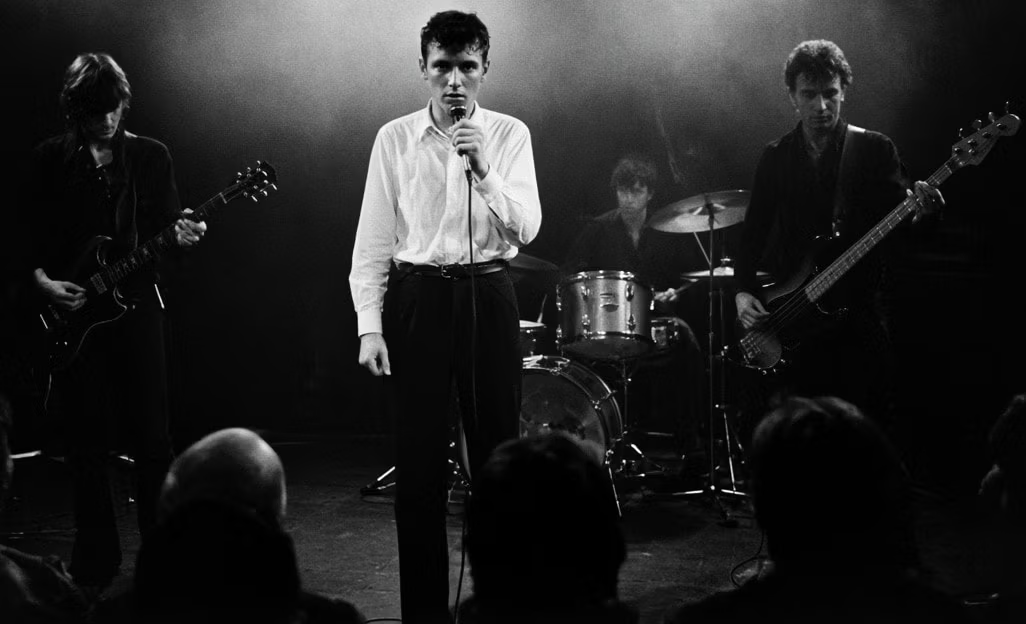
The boundary between Joy Division and goth remains blurry because genre labels often arrive after the fact. Their music is generally categorized as post-punk, but its gothic overtones and influence on Bauhaus, Killing Joke, and other dark post-punk groups are unmistakable.
The emotional appeal of this music also overlaps with darker forms of fascination more broadly. Morbid curiosity can help explain why art about fear, death, and discomfort can be compelling rather than merely unpleasant.
Why “Bela Lugosi’s Dead” Became a Goth Landmark
Bauhaus formed in Northampton, England, in 1978. Their 1979 debut single, “Bela Lugosi’s Dead,” became one of the most important recordings in gothic rock history because it concentrated so many earlier influences into one unusually complete statement.
The song is long, sparse, and patient. It uses:
- An ominous, repeating bassline
- Dub-influenced, echoing guitar textures
- Dry, rattling percussion
- Dark, theatrical vocal delivery
- Vampire imagery drawn from horror culture
- Minimalism that makes every sound feel significant
Its vampire theme is important, but “Bela Lugosi’s Dead” would not be a landmark merely because it mentions an iconic horror actor. Its power comes from the arrangement. The song creates dread through space, repetition, restraint, and atmosphere. It feels less like a conventional rock single and more like a ritual unfolding in real time.
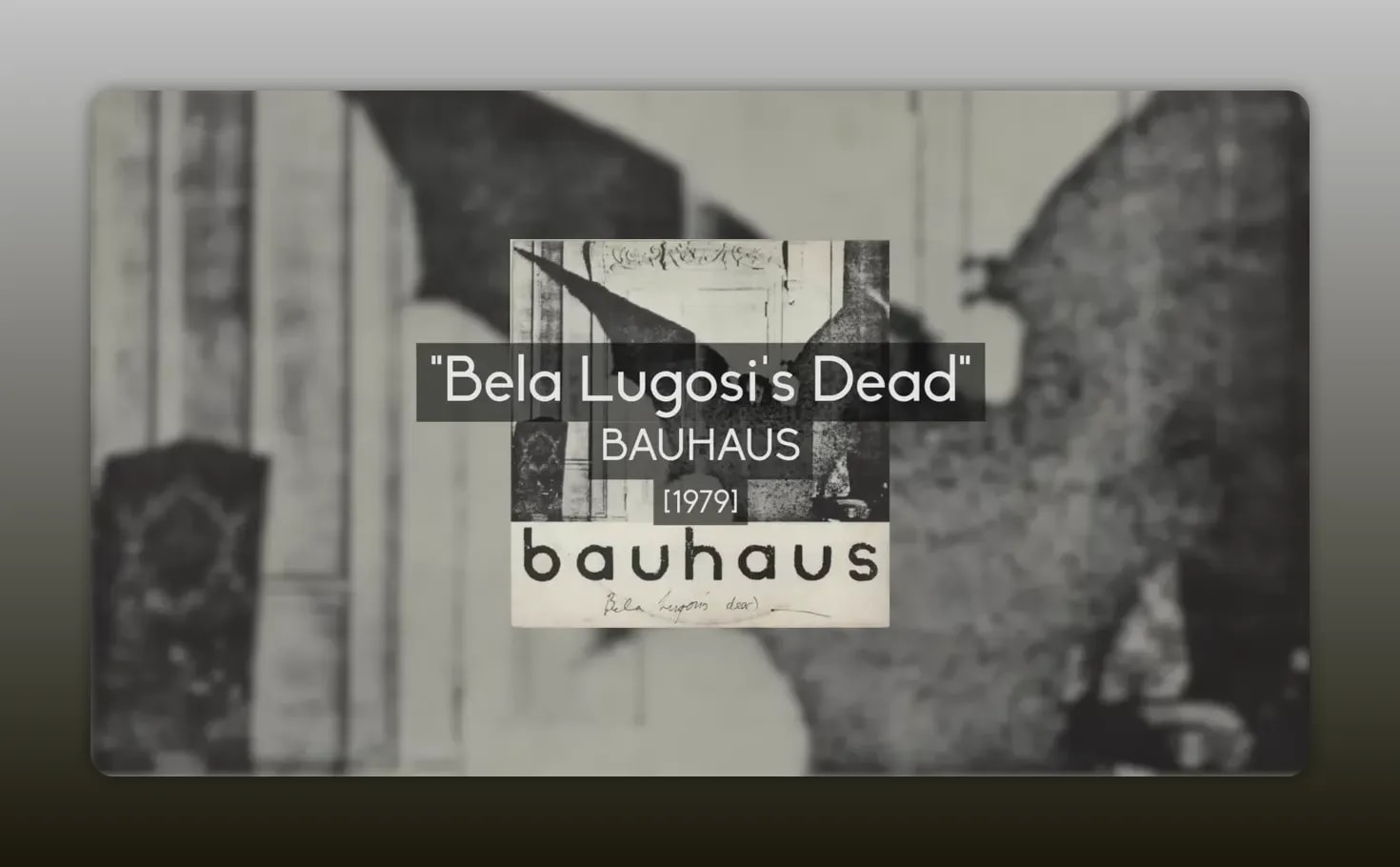
“Bela Lugosi’s Dead” is often called the first goth rock song. That description is useful as shorthand, but it should not erase the longer history behind it. The song did not emerge from nowhere. It drew together the theatricality of Hawkins, the vocal gravity of Morrison, the drone of the Velvet Underground, Nico’s bleak atmosphere, glam’s stylization, Suicide’s electronic minimalism, horror punk’s imagery, and post-punk’s sonic experimentation.
Bauhaus themselves resisted being reduced to the goth label, a pattern common among artists associated with the genre. Labels can clarify history, but they can also make musicians seem narrower than they were. Bauhaus had roots in punk, dub, glam, art rock, funk, and experimental music as well as gothic rock.
Goth Music vs. Goth Fashion: Why the Difference Matters
Fashion is highly visible, so it is often the first thing people associate with goth. Black clothing, eyeliner, teased hair, corsetry, leather, lace, boots, silver jewelry, and pale makeup can all appear within goth style. But the subculture has always been more than a dress code.
A useful way to separate the concepts is this:
- Goth fashion is a visual vocabulary shaped by punk, glam, Victorian imagery, horror, fetish wear, romanticism, and individual creativity.
- Goth music is a musical lineage rooted in post-punk and related dark alternative styles.
- Goth subculture is the community and culture that formed around music, fashion, nightlife, art, literature, and shared sensibilities.
Someone can appreciate goth music without dressing in goth fashion. Someone can dress in a dark or gothic style without listening to goth music. Neither fact invalidates personal taste, but the distinction keeps the music’s history from being flattened into an aesthetic stereotype.
For more context on the personal and cultural dimensions of the subculture, explore understanding goth identity and everyday culture.
A Beginner’s Listening Path Through Goth History
A chronological listening path makes the connections between proto-goth, post-punk, and gothic rock easier to hear. The following sequence is not a list of every essential recording. It is a practical route through the major ideas that shaped the genre.
- Screamin’ Jay Hawkins, “I Put a Spell on You”
Listen for theatrical vocal performance and supernatural intensity. - The Doors, “The End”
Notice the funereal pacing, poetic darkness, and dramatic baritone. - The Velvet Underground, “Venus in Furs”
Focus on the drone, repetition, and unsettling subject matter. - The Velvet Underground, “All Tomorrow’s Parties”
Hear Nico’s detached vocal presence and the song’s shadowy atmosphere. - Nico, The Marble Index
Pay attention to harmonium, sparse arrangements, and emotional isolation. - Roxy Music, “In Every Dream Home a Heartache”
Listen for the uneasy combination of glamour, obsession, and slow-building tension. - Brian Eno, “Third Uncle”
Hear the clipped, mechanical energy that later post-punk artists adapted. - Suicide, “Frankie Teardrop”
Approach it as an example of how minimal electronics and reverb can create horror. - The Cramps, “Human Fly”
Notice the committed fusion of rock and roll, camp, and monster-movie imagery. - Siouxsie and the Banshees, Juju
Explore the transition from punk into more gothic sonic territory. - Joy Division, Unknown Pleasures
Listen for spacious production, rhythmic tension, and emotional severity. - Bauhaus, “Bela Lugosi’s Dead”
Hear how many earlier threads become unmistakably gothic rock.
Common Misconceptions About Goth Music
“All dark music is goth.”
Darkness alone is not a genre. Black Sabbath, Alice Cooper, the Cramps, Marilyn Manson, and My Chemical Romance all use elements that may appeal to goth audiences, but they come from different musical traditions. A band can be heavy, theatrical, sad, horror-themed, or black-clad without being gothic rock.
“Goth started with Bauhaus.”
Bauhaus helped define goth as a recognizable genre, but their work was built on earlier developments in blues theater, psychedelic rock, art rock, glam, punk, electronic minimalism, and post-punk. “Bela Lugosi’s Dead” is a landmark because it gathers those influences so effectively.
“Goth is only about sadness.”
Goth can be melancholic, but it can also be sensual, danceable, witty, romantic, theatrical, surreal, and playful. Horror imagery and dark moods are often handled with camp, exaggeration, or artistic distance.
“The music and the fashion are interchangeable.”
They overlap, but they are not the same thing. Music created the scene’s foundation, while fashion became a powerful form of expression within it. Treating appearance as the entire definition misses the rich musical history behind the subculture.
How Goth Continued to Change
Goth did not stop developing after its first wave. The sound changed as artists brought in drum machines, electronic production, dreamier textures, industrial influences, alternative rock, and newer forms of theatrical pop. The Cure, Siouxsie and the Banshees, Killing Joke, the Birthday Party, the Sisters of Mercy, Cocteau Twins, and many later artists all expanded different parts of the genre’s vocabulary.
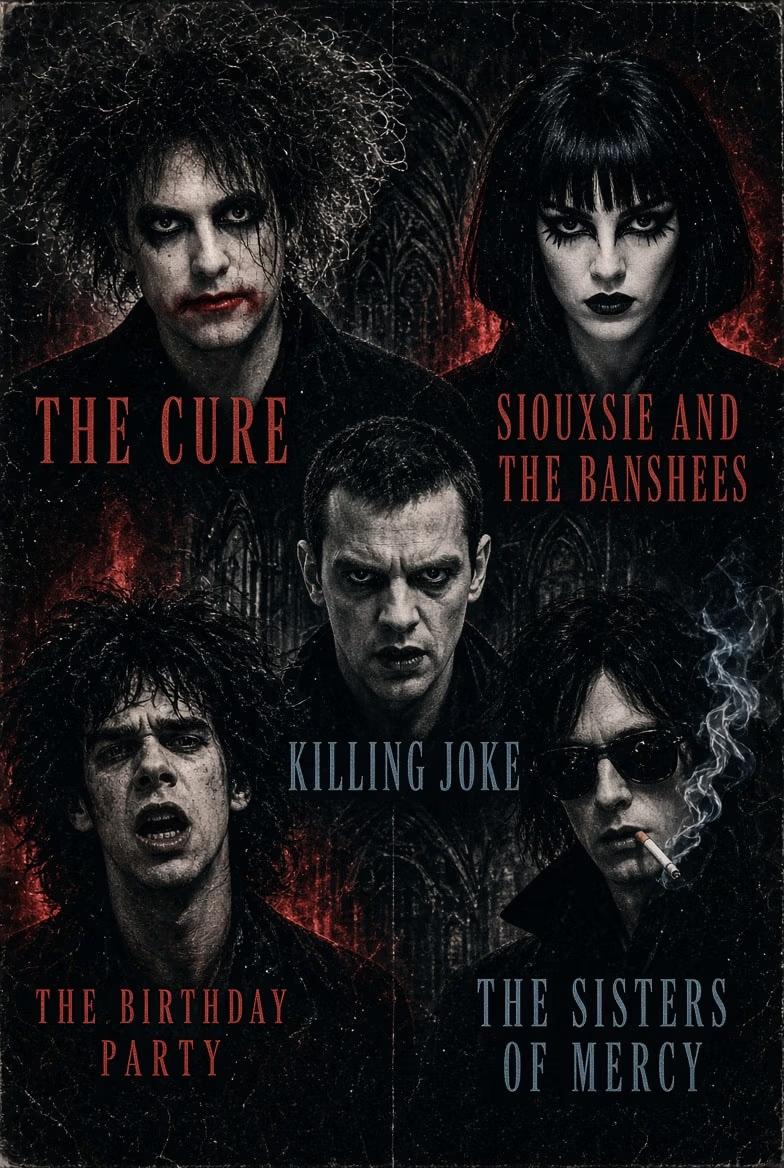
That evolution is why modern dark music can sound very different from Bauhaus while still sharing some of goth’s emotional or aesthetic concerns. A contemporary artist may emphasize electronics, art pop, horror punk, industrial texture, or atmospheric songwriting rather than the exact sonic template of early gothic rock.
The important question is not whether every dark artist fits a rigid label. It is whether the music connects meaningfully to the traditions of post-punk atmosphere, gothic romanticism, theatrical darkness, and the culture that formed around them.
Key Takeaway
Goth became goth through accumulation. Its foundations include Screamin’ Jay Hawkins’s theatrical menace, the Doors’ poetic dread, the Velvet Underground’s drones, Nico’s cold ambience, Alice Cooper’s horror staging, glam rock’s visual freedom, Suicide’s electronic minimalism, the Cramps’ monster-movie commitment, and post-punk’s spacious experimentation.
Bauhaus did not invent darkness in music. They gave it one of its clearest and most enduring gothic rock forms. That is why “Bela Lugosi’s Dead” remains a defining point in the history of goth: it made an emerging set of sounds, images, and attitudes feel like a genre with its own identity.
Frequently Asked Questions
Is Bauhaus the first goth band?
Bauhaus is widely considered one of the first definitive goth rock bands, and “Bela Lugosi’s Dead” is frequently described as the first goth rock song. However, the group developed from earlier influences including the Velvet Underground, Nico, glam rock, punk, Suicide, Joy Division, and other post-punk artists.
What was the first goth song?
“Bela Lugosi’s Dead” by Bauhaus is the song most often given that title. It is more accurate to call it a foundational gothic rock record, since many earlier songs had already used key proto-goth elements such as horror, drones, theatricality, dark lyrics, echo, and ominous vocals.
Is gothic rock the same as post-punk?
Gothic rock grew directly out of post-punk, but the terms are not identical. Post-punk is a broad category covering many experimental approaches that followed punk. Gothic rock is a darker branch of that world, usually marked by atmospheric production, dramatic vocals, sparse guitars, macabre imagery, and dark romanticism.
Why are Joy Division associated with goth?
Joy Division is generally classified as post-punk, but their bleak themes, deep vocals, spacious production, and lasting influence on Bauhaus and other dark post-punk artists make them essential to goth history. They helped shape the sound that goth bands would later develop further.
Does wearing black make someone goth?
No. Wearing black or using dramatic makeup can be part of goth fashion, but goth is not defined by clothing alone. The subculture is strongly connected to a musical lineage that begins with post-punk and gothic rock, alongside related art, fashion, literature, and community.
Are Marilyn Manson and My Chemical Romance goth?
Both have used gothic visual elements and may appeal to some goth fans, but they are not traditionally classified as goth music. Their primary musical roots lie in other styles, including industrial rock, alternative metal, emo, and rock. Gothic fashion and gothic rock are related but not interchangeable categories.