


Goth is more visible online than it has been for years. Black lipstick, corsets, fishnets, platform boots, and dark makeup now circulate constantly through social media feeds, shopping apps, and viral posts. That visibility has brought new people to alternative fashion, but it has also created a difficult question: when does broad exposure become a flattening of a subculture?
The answer is not that someone has to earn the right to wear black, nor that goth women must be modest, apolitical, or unattractive to be authentic. Goth has never been a single uniform look or a pure, sanitized lifestyle. However, it is more than a marketable aesthetic. It has roots in music, counterculture, community, self-expression, and a longstanding resistance to mainstream expectations.
Understanding the current “e-girl goth” debate means holding two ideas at once. Adult women have autonomy over their appearance and work. At the same time, turning “goth” into a sexualized keyword or a quick costume can reinforce stereotypes that affect real people who participate in the subculture every day.
Key Takeaways
- Modern goth is rooted in post-punk music, counterculture, dark art, and personal expression, not clothing alone.
- Sexual expression has historical space in alternative culture, but goth appearance never implies consent or a shared sexual identity.
- Fair criticism targets labels, platforms, and stereotypes, not women’s bodies, private lives, or right to exist online.
- Meaningful participation comes from music, context, sustainable style, local community, and thoughtful values.
Table of Contents
- What Does Goth Actually Mean?
- Why Goth Became More Mainstream Online
- What Is the E-Girlification of Goth?
- Goth Has Always Included Sexuality, But Not Everyone Is a Fetish
- When Is Criticism Fair?
- Why Representation Matters More Than Viral Aesthetics
- How to Explore Goth Without Treating It Like a Trend
- How to Discuss Goth Online Without Becoming the Problem
- Can Goth Survive Mainstream Attention?
- The Bottom Line
What Does Goth Actually Mean?
“Goth” can refer to several related but distinct things: Gothic architecture, Gothic literature, dark fashion, horror imagery, goth music, and the modern goth subculture. Confusion begins when these meanings are treated as interchangeable.
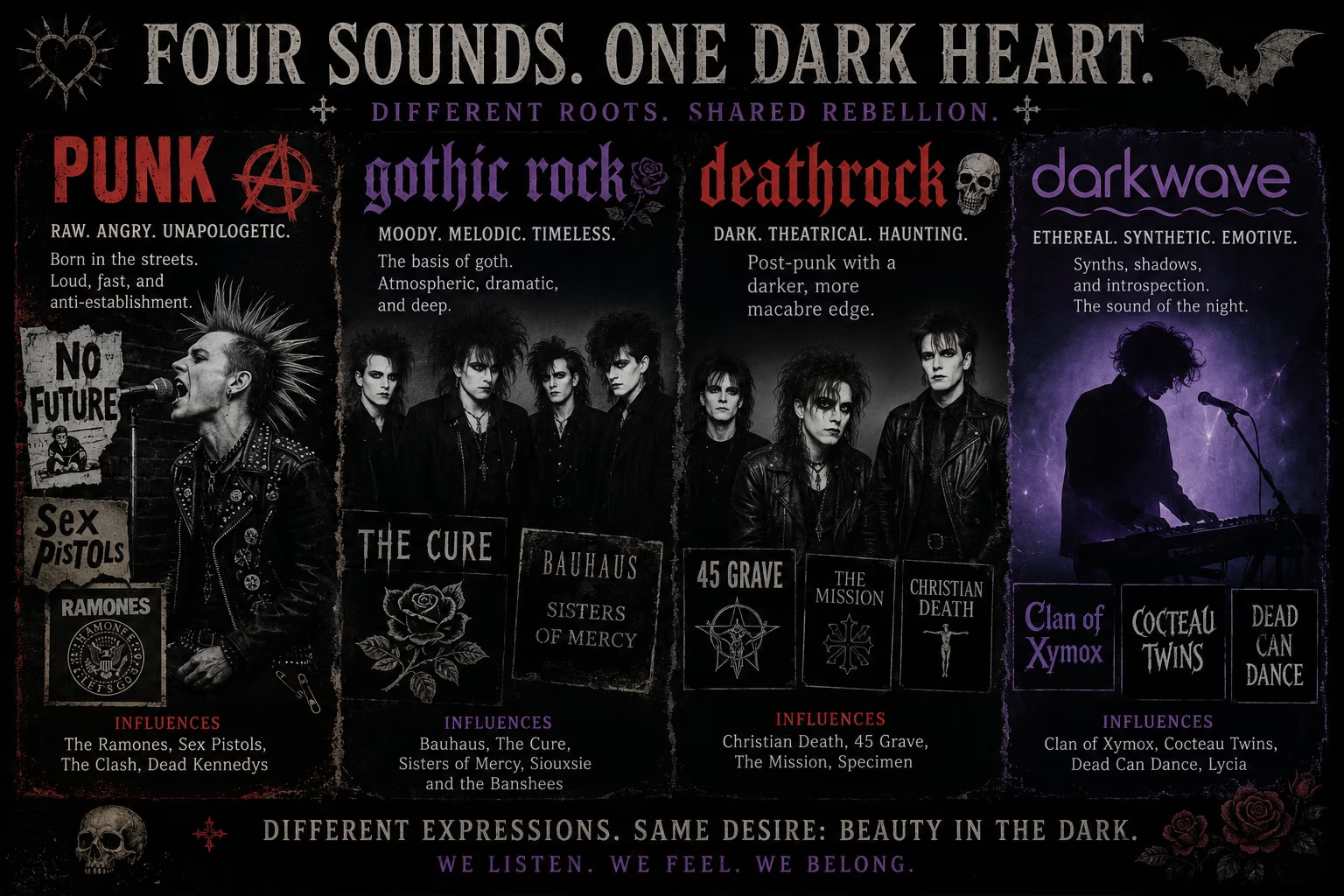
The modern goth subculture emerged from post-punk in the late 1970s and developed alongside punk. Music is central to its history, including artists commonly associated with early goth such as Bauhaus, The Cure, Siouxsie and the Banshees, and The Sisters of Mercy. Its aesthetic drew from punk, Victorian mourning dress, horror, religious imagery, romanticism, theatrical makeup, and nightlife.
That does not mean every person in black clothing needs an encyclopedic knowledge of music history. People can enjoy gothic fashion without identifying as goth, and people can be goth without presenting in full goth attire every day. But it does mean that a look alone is not the whole culture.
For a closer look at the difference between the term’s historical, architectural, literary, and subcultural meanings, read Goth Explained: From Ancient Tribes to the Modern Subculture.
Gothic history is broader than the modern subculture
Gothic architecture originated centuries before goth music. The Basilica of Saint-Denis in France is widely connected with the emergence of Gothic architectural forms in the twelfth century. Pointed arches, soaring vaults, dramatic vertical scale, and stained glass created a visual vocabulary that still influences dark and romantic style today.
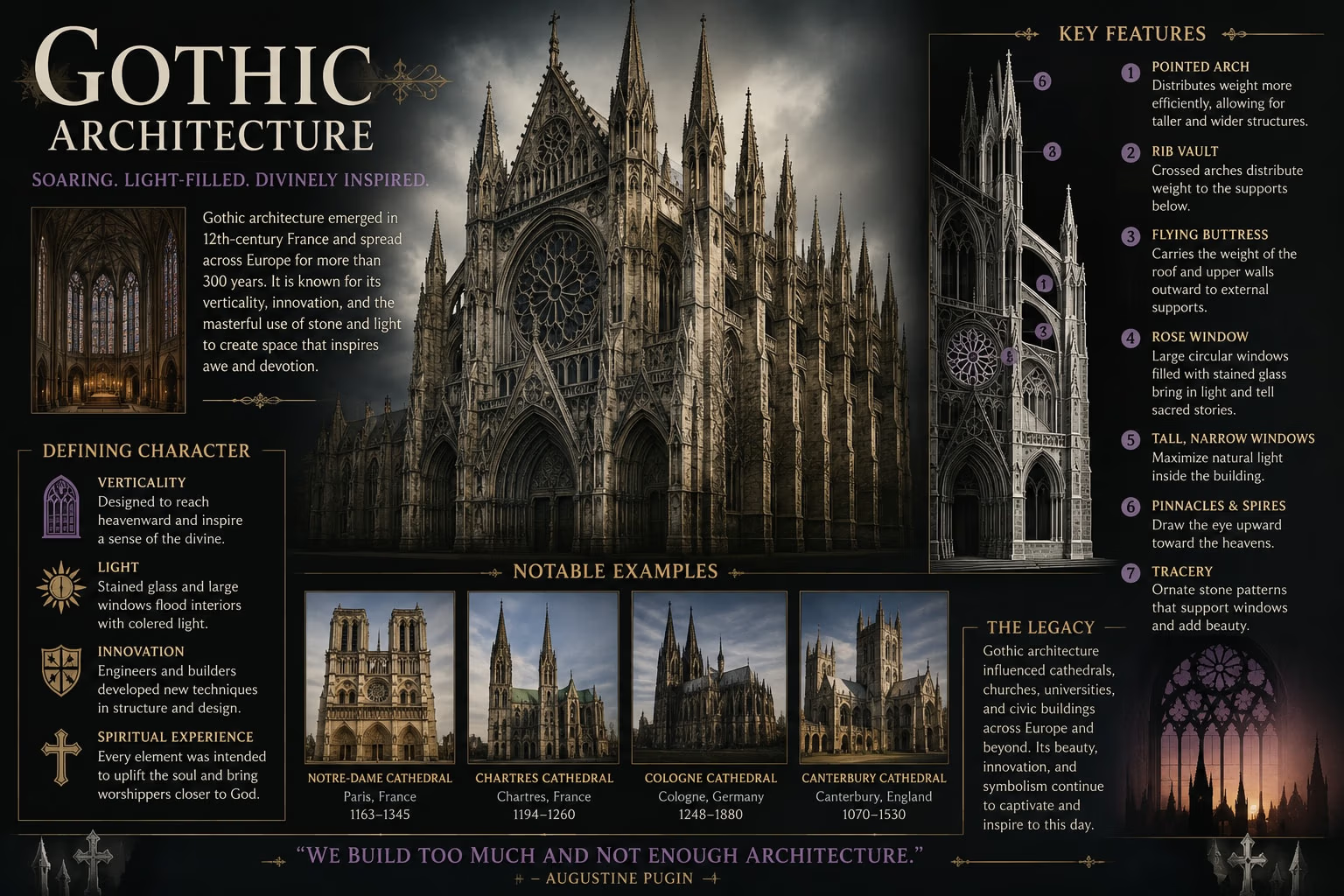
Later, Gothic fiction popularized themes of death, decay, terror, romance, the supernatural, and social unease. Novels such as Frankenstein, Dracula, and Strange Case of Dr Jekyll and Mr Hyde are part of that literary lineage. Victorian mourning fashion, especially the cultural association of black clothing with grief, also shaped the dark silhouettes that continue to influence alternative fashion.
Those references matter because they show why goth cannot be reduced to a trendy makeup style. It is a web of cultural influences rather than a single online visual category. For more on the emotional and cultural appeal of darkness, fear, and taboo, see Morbid Curiosity Explained: Psychology, Fear & Fascination.
Why Goth Became More Mainstream Online
Social platforms make alternative style instantly accessible. A person can find outfit ideas, makeup tutorials, music recommendations, niche creators, and affordable clothing within minutes. That access is not inherently bad. It can be especially valuable for people who live far from an alternative scene, cannot attend events, or are only beginning to explore how they want to look.
The issue is the platform incentive structure. Fast content rewards instantly recognizable aesthetics, clear labels, dramatic transformation, and sexualized imagery. A detailed history of post-punk or a local club night is less likely to travel widely than a short clip built around a familiar fantasy.
As a result, “goth” is often used online as a broad tag for nearly any dark, feminine, or alternative-presenting outfit. Black hair, pale foundation, winged liner, a fitted top, and a short skirt may be enough for an algorithmic label, regardless of whether the person has any relationship with goth music, community, or politics.
Accessibility is not the same as dilution
It is easy to romanticize the past as though hardship made subcultures more authentic. Earlier generations often had fewer shops, less information, and more social hostility. Many people altered charity-shop clothing, dyed garments at home, made accessories themselves, traded music recommendations locally, and faced bullying or isolation for looking visibly alternative.
Greater access to clothes and inspiration is a positive change. Nobody should have to be harassed, excluded, or financially comfortable before experimenting with alternative fashion. The problem is not that newcomers exist. It is not that affordable clothes exist. It is not that goth looks are now easier to create.
The more useful criticism is directed at a culture of disposable trend consumption: adopting a label for visibility, policing longtime participants with little understanding, and abandoning the look as soon as it is no longer profitable or fashionable.
What Is the E-Girlification of Goth?
The phrase “e-girlification of goth” usually refers to the way goth-inspired visual cues are repackaged for internet attention. This can include exaggerated makeup, deliberately flirtatious content, cosplay-adjacent styling, gaming aesthetics, and content designed around the fantasy of the “hot goth girl.”
Critics often use the term broadly, sometimes too broadly. It should not become a way to shame women for being attractive, wearing makeup well, having a sexual identity, doing adult work, or participating in social media. Those things do not cancel out someone’s relationship with a subculture.
Still, there is a meaningful distinction between:
- An alternative person who makes adult content: Their existing style remains part of how they present themselves.
- A creator using a goth look for a particular performance: This may be a costume or an aesthetic choice without being dishonest.
- A creator marketing “goth” itself as a sexual category: This shifts from personal expression toward selling a stereotype about an entire group.
The third category is where frustration becomes understandable. When “goth” is presented as shorthand for sexual availability, emotional instability, kink, or a male fantasy, people who simply dress alternatively can face the consequences offline.
Goth Has Always Included Sexuality, But Not Everyone Is a Fetish
A common reaction to criticism of sexualized goth content is that goth has always been sexy. That is true. Dark glamour, underground nightlife, queer self-expression, fetish influences, fishnets, leather, latex, corsetry, O-ring accessories, and provocative performance have all been part of alternative cultural spaces in different ways.
Icons such as Vampira, Morticia Addams, and Elvira demonstrate that the public fascination with glamorous, dark, and sexualized women predates social media by decades. Goth culture has never been uniformly family-friendly, and attempts to erase its adult, queer, or sexually expressive dimensions can drift into purity politics.
But this history does not support a different harmful claim: that everyone who wears goth fashion is inviting sexual assumptions. There is no contradiction between recognizing the erotic history of some gothic imagery and insisting on individual boundaries.
Clothes are not consent, a music taste is not consent, and a subcultural identity is not consent. Someone in a lace dress, leather harness, dramatic makeup, or a plain black T-shirt has not signaled what they want sexually, romantically, or emotionally.
The stereotype has real social effects
Alternative women are frequently stereotyped as being unusually promiscuous, troubled, “wild,” or available for a certain kind of intimacy. Those assumptions can surface in dating, public interactions, school environments, workplaces, and direct messages. They also pressure people to conform to an imagined role just to avoid being considered boring or inauthentic.
This is why the debate cannot be solved by simply saying that people should ignore stereotypes. They should not exist, but they do. Critiquing media that actively markets goth as a fetish category is not the same as blaming women for the behavior of men.

Responsibility for harassment, coercion, objectification, and violence lies with the person who behaves harmfully. Full stop. But creators, platforms, audiences, and communities can still discuss how repeated imagery changes public assumptions without turning that discussion into personal abuse.
When Is Criticism Fair?
Fair criticism focuses on media, systems, labels, and consequences. Unfair criticism tries to diagnose strangers, attack their appearance, speculate about their private lives, or demand that women prove their worthiness to exist in a style.
A productive critique asks questions such as:
- Is the term “goth” being used accurately, or only because it attracts clicks?
- Does the content rely on stereotypes about alternative women?
- Is sexual material clearly signposted and restricted to appropriate audiences?
- Are adult creators being presented as representatives of an entire subculture?
- Does the content encourage audiences to treat goth identity as a consumable fetish?
- Are platforms rewarding the most sexualized version of an aesthetic while hiding its music, history, politics, and local communities?
These questions are stronger than accusations of being a “poser.” The word is often used as a shortcut to avoid discussing what is actually wrong. It creates an in-group and out-group dynamic, encourages pile-ons, and often punishes people who are young, experimenting, poor, disabled, isolated, or simply new.
What criticism should never become
Criticism loses all credibility when it becomes misogyny. Calling women ugly, stupid, fake, attention-seeking, or morally corrupt because they are sexual is not a defense of goth culture. It is another form of policing women’s bodies and choices.
The same applies to racism, transphobia, homophobia, ableism, and far-right recruitment disguised as “protecting tradition.” Goth’s history of nonconformity does not make it immune to exclusion. Any account claiming that white nationalism, reactionary politics, or hostility to queer people belongs naturally within goth should be examined critically.

Photo by Claudio Schwarz on Unsplash
Goth communities have long included people who were marginalized for how they looked, loved, dressed, or expressed themselves. A culture built around rejecting narrow mainstream expectations cannot credibly defend itself through narrow standards of beauty, race, gender, sexuality, or politics.
Why Representation Matters More Than Viral Aesthetics
Online representation shapes first impressions. When a person searches for goth and mostly finds AI-generated images, shopping hauls, thirst traps, and “goth girlfriend” fantasy content, they receive a distorted picture of what the culture contains.
That distorted picture affects both newcomers and outsiders. A young person interested in goth may think they need a specific body type, face, makeup skill, or level of sexual confidence to belong. Someone unfamiliar with the subculture may assume that every goth person fits a sexual stereotype.
Neither idea reflects reality. Goth style includes elaborate trad goth looks, romantic goth, deathrock, cyber goth, Victorian-inspired looks, casual everyday outfits, DIY punk influence, and many personal combinations that defy neat categories. It includes people who dress up daily, people who dress plainly, performers, parents, students, workers, queer people, religious people, and people who do not fit the narrow aesthetic that algorithms repeatedly elevate.
Even architecture offers a useful comparison. Gothic buildings have identifiable features, but no two cathedrals are identical. The same is true of a living subculture. Learn more about the visual roots in Recognize Gothic Cathedrals: Features, Innovations & History.
How to Explore Goth Without Treating It Like a Trend
There is no entrance exam for goth. You do not need expensive clothes, flawless makeup, an online following, or a perfectly curated bedroom. A more meaningful approach is to build a relationship with the culture over time.
1. Start with the music
Explore foundational artists and follow the sounds that genuinely resonate with you. Post-punk, gothic rock, deathrock, darkwave, and related scenes are broad enough to reward curiosity. Listen beyond the most obvious playlist staples and pay attention to the scenes, venues, labels, and artists around the music.
2. Learn the context behind the imagery
Read Gothic fiction. Look at Victorian mourning dress, horror cinema, Gothic art, and punk history. Understanding references helps you make style choices with intention, but it also makes the experience richer than buying a pre-built look.
3. Build outfits slowly and sustainably
Secondhand shopping, garment alteration, repairs, swaps, and DIY styling are practical ways to develop a wardrobe. Not everyone can avoid fast fashion entirely, especially on a limited budget, but buying fewer pieces, rewearing them, and making items your own is more sustainable than treating every trend as disposable.
A black blouse, skirt, boots, jewelry, mesh layer, and a few personal accessories can create many looks. Style is often more about layering, texture, proportion, and repetition than owning a huge number of items.
4. Find community beyond the algorithm
Look for local club nights, independent gigs, record shops, themed events, art markets, book groups, or friends with overlapping interests. Community does not have to mean nightlife. It can mean sharing music, helping at an event, supporting independent artists, or simply finding people who understand why the culture matters to you.

Photo by Anastasia Saldatava on Unsplash
5. Be curious about politics and values
Alternative identity is not a substitute for political awareness. Read beyond viral posts and simplistic summaries. Learn how local issues affect your community. If it is safe to do so, support causes, mutual aid, charities, protests, Pride events, and anti-racist organizing that align with your values.
Goth is not made more authentic by performative outrage online. It is made more meaningful through thoughtfulness, solidarity, and real-world participation.
How to Discuss Goth Online Without Becoming the Problem
The internet rewards certainty, outrage, and public humiliation. Communities do not have to copy that model. Whether you have been involved in goth for years or are brand new, a few habits can improve the conversation.
- Critique the content, not a stranger’s face or body.
- Distinguish fashion exploration from deliberate exploitation.
- Do not assume an online persona reveals someone’s entire private life.
- Recommend music, books, shops, artists, and events instead of only policing labels.
- Reject harassment even when you dislike someone’s content.
- Challenge misogyny, racism, and far-right rhetoric with the same energy used for “poser” discourse.
- Remember that subcultures are communities, not branding opportunities.
There is a difference between saying, “This use of the label reinforces a harmful stereotype,” and saying, “This person deserves abuse.” The first opens a conversation. The second reproduces the cruelty that alternative communities have often faced from outsiders.
Can Goth Survive Mainstream Attention?
Goth has survived moral panics, hostile media coverage, shallow makeovers, public misunderstanding, and repeated efforts to make alternative people appear threatening or ridiculous. In the aftermath of the Columbine shooting, inaccurate associations between goth culture and violence led to suspicion and harassment of alternative young people. In the United Kingdom, the murder of Sophie Lancaster remains a devastating reminder that prejudice against visibly alternative people can have grave consequences.
The Sophie Lancaster Foundation works to challenge prejudice and intolerance through education and advocacy. Its work is a reminder that arguments about subculture are not purely aesthetic. The way people are represented and treated matters.
Mainstream attention will continue to change goth. Some changes will broaden access, introduce new creativity, and help isolated people find a language for themselves. Some will reduce the culture to a marketable visual shorthand. Both can be true.

Photo by Dominik Day on Unsplash
The best response is not to freeze goth in a particular decade or punish people for discovering it late. It is to keep its deeper dimensions visible: the music, the politics, the art, the history, the DIY impulse, the local scene, the emotional honesty, and the freedom to look strange without becoming a product for somebody else.
The Bottom Line
The internet has not ruined goth, but it has made goth easier to misunderstand. Viral content can flatten a complex subculture into a beauty standard, a shopping category, or a sexual fantasy. That deserves criticism when it reinforces stereotypes or pushes adult-coded content into poorly signposted public spaces.
At the same time, protecting goth cannot mean restricting women’s autonomy, attacking newcomers, or demanding that every participant conform to an old-school template. Goth has room for experimentation, sexuality, disagreement, and evolution. What it does not need is more cruelty disguised as authenticity.
Explore deeply, dress for yourself, treat people as people, and make room for a goth culture that is more interesting than whatever the algorithm can sell.
Frequently Asked Questions About Goth and Internet Culture
Is goth just a fashion style?
No. Goth fashion is highly visible, but modern goth is also a music-based subculture with roots in post-punk and connections to art, literature, nightlife, DIY culture, and countercultural values. Someone can wear gothic fashion without identifying as goth, and a goth person may not dress in elaborate outfits every day.
Can you be goth if you are new to the music?
Yes. Everyone begins somewhere. The important part is genuine curiosity and a willingness to explore the culture rather than using the label only as a trend, an argument tool, or a marketing keyword.
Is it misogynistic to criticize sexualized goth content?
Not necessarily. It is possible to critique the way “goth” is marketed as a stereotype or fetish while respecting adult women’s autonomy and rejecting harassment. The focus should remain on the content, its framing, its audience, and its possible social effects, not personal insults or moral judgment.
Does dressing goth mean someone is into kink or alternative sex?
No. Some goth and alternative spaces have connections to adult nightlife and fetish aesthetics, but no style of dress reveals an individual’s interests, boundaries, consent, or sexual preferences. Assuming otherwise is stereotyping.